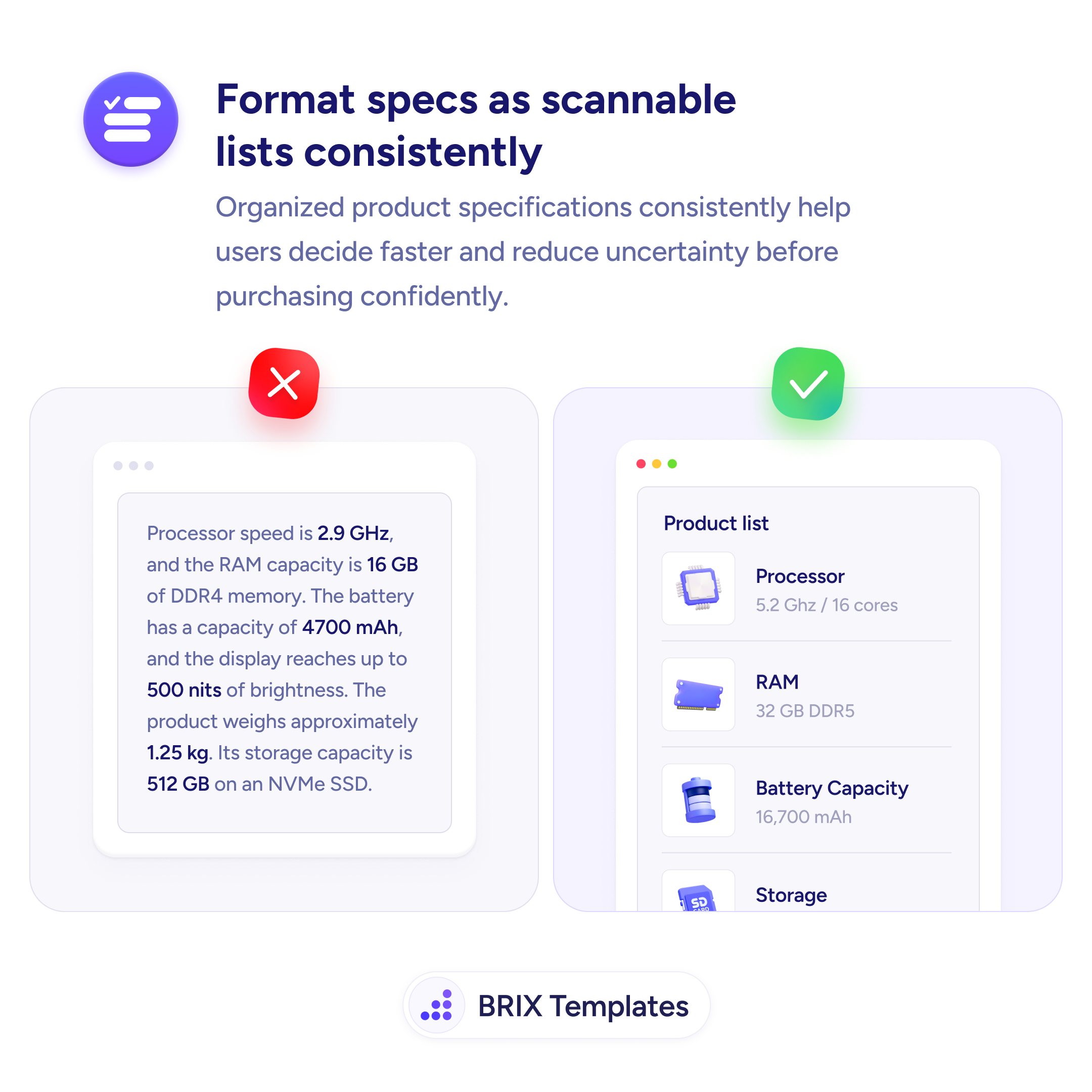
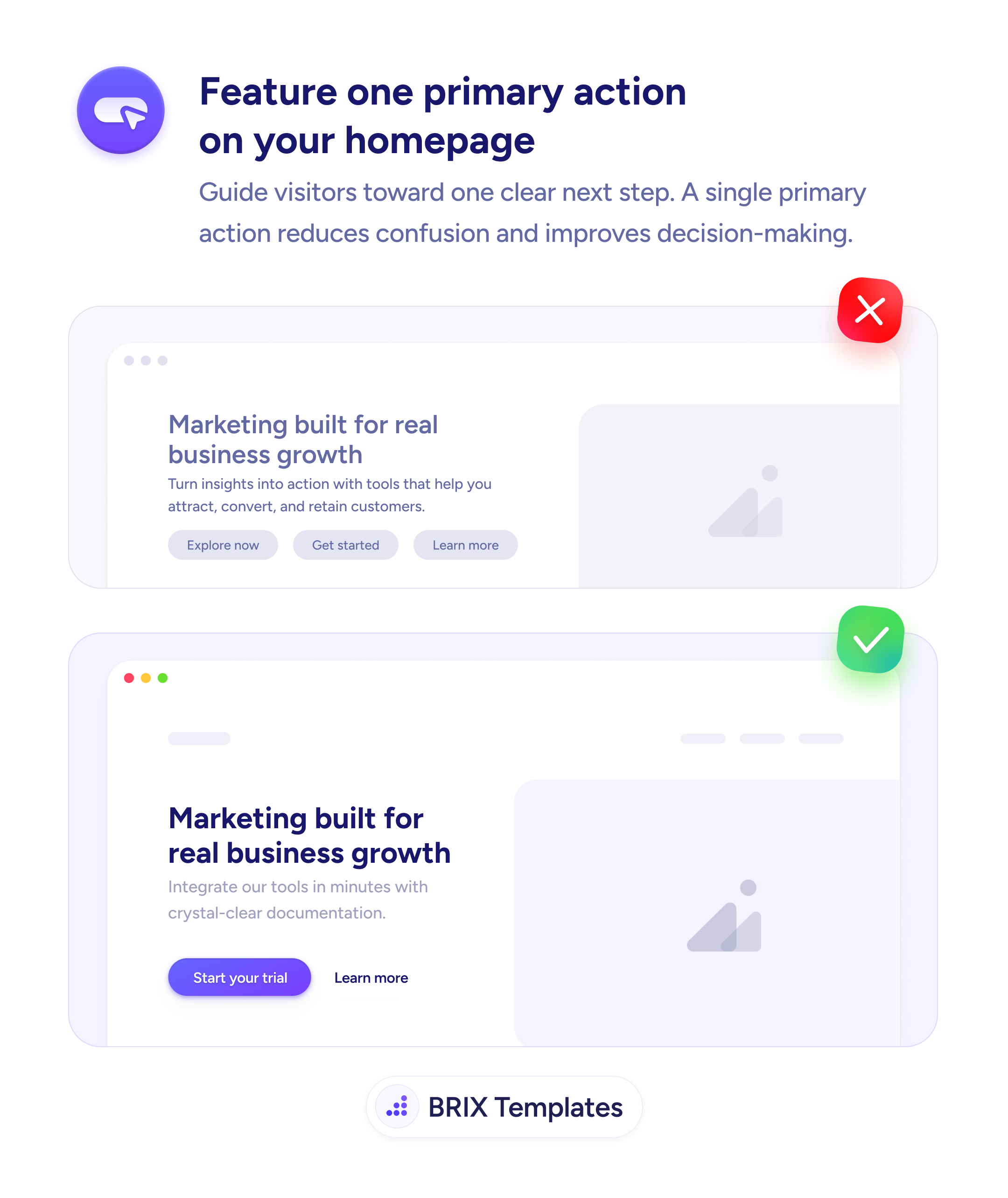
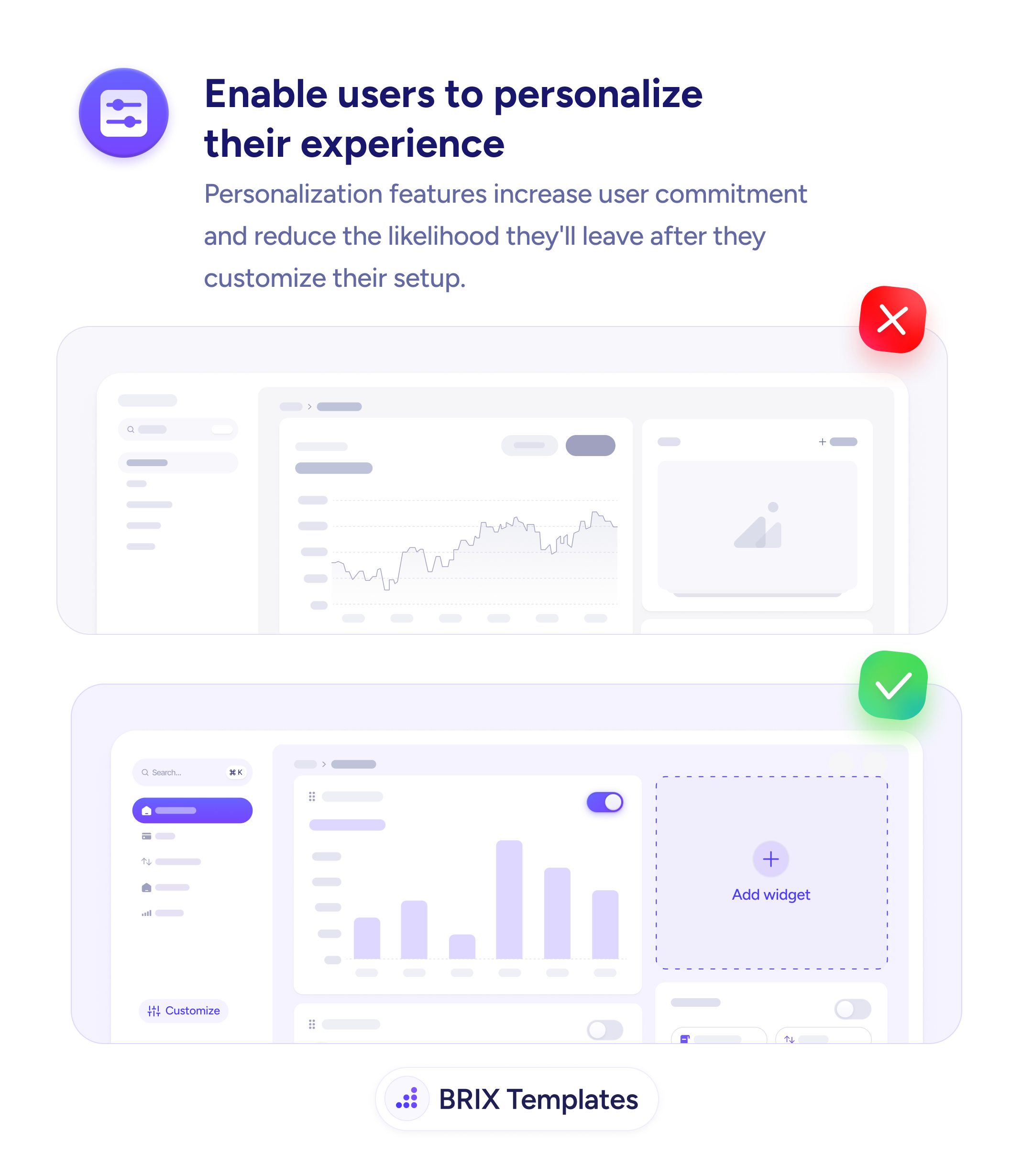
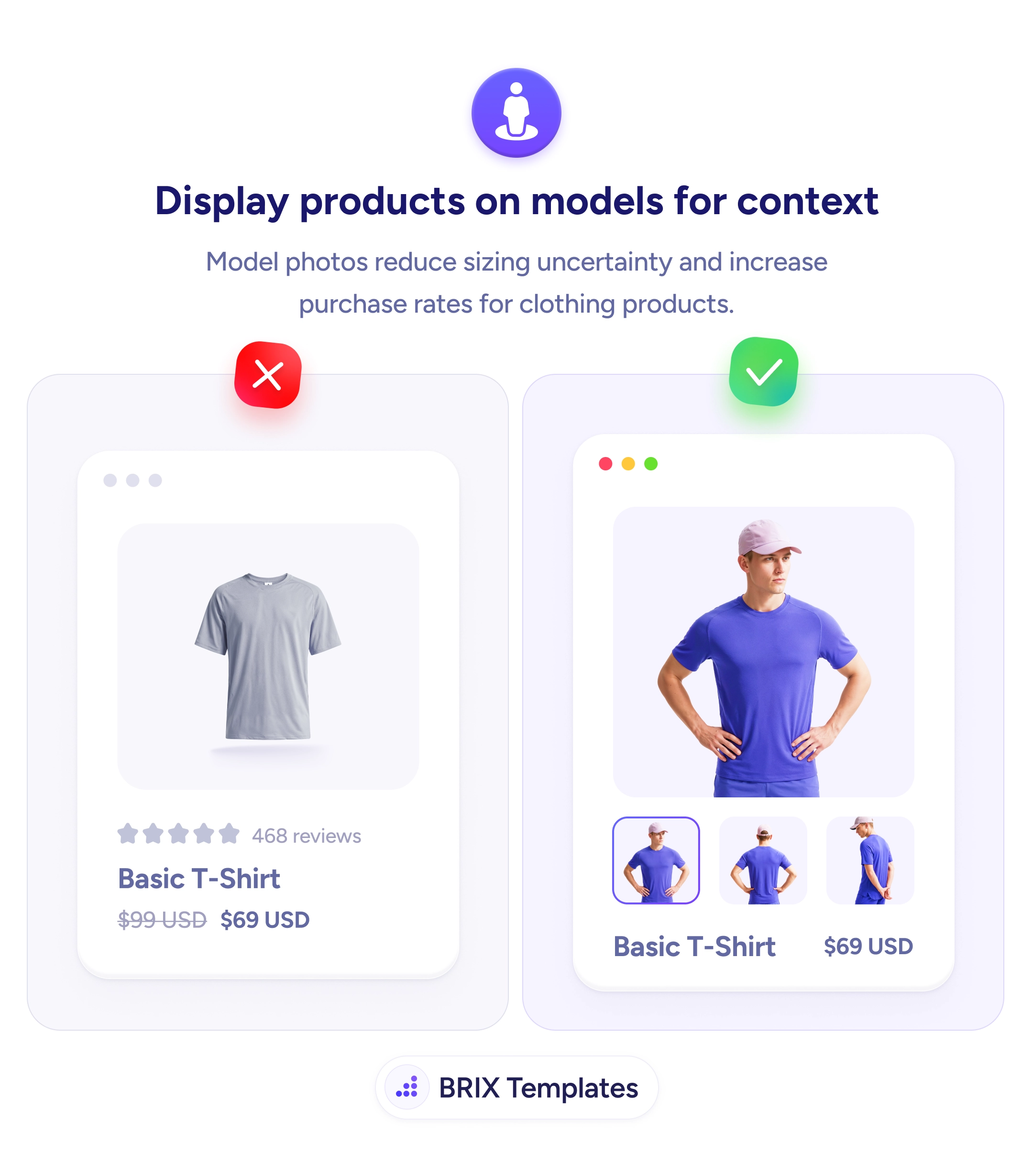
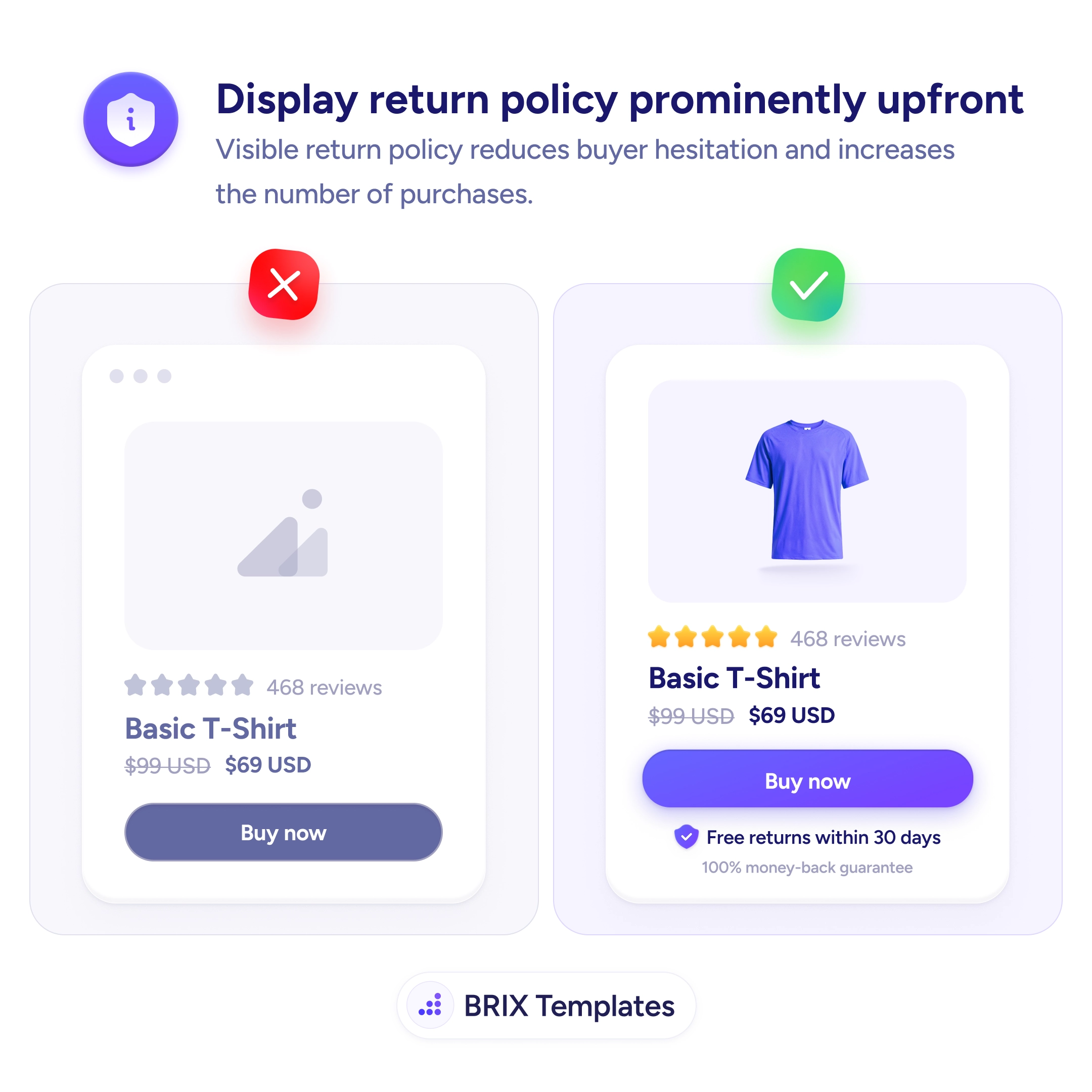
UX tip graphic titled 'Display products on models for context.' The left panel marked with a red X shows a Basic T-Shirt product card with a flat, grey shirt photographed on a plain white background, a star rating with 468 reviews, and a price of $99 crossed out to $69 USD. The right panel marked with a green checkmark shows the same Basic T-Shirt worn by a male model in a purple tee and cap, with a row of thumbnail images showing front, back, and side angles, the product name, and $69 USD. BRIX Templates branding at the bottom.

Checkout & payments

A shirt floating on a white background tells shoppers what it looks like — not how it will look on them

A flat product cutout leaves fit and scale to guesswork. Show clothing on a model from multiple angles to cut sizing doubt and lift purchase rates.

How to show products on models for context

A clothing card that shows a flat, grey shirt on a white background tells the shopper what the garment looks like on its own — but not how it will look on a body. For apparel, that second question is the one that decides the purchase. Without a person for scale, fit, and drape, the buyer is left guessing whether it will actually suit them, and guessing shoppers hesitate, abandon, or over-order and return.

The fix is to show the product worn on a model, from more than one angle. The same shirt on a person — with front, back, and side thumbnails to click through — answers fit and proportion the way a fitting room would, letting the buyer mentally try it on. Reducing that sizing uncertainty is one of the most direct ways to lift purchase rates and cut returns on clothing.

Model shots land hardest inside a multi-angle gallery the buyer can explore, and they pair naturally with a size guide that’s easy to find — one shows how a size looks worn, the other gives the measurements to confirm it. Keep a clean on-white shot in the set too, so color and cut stay easy to judge; the aim is to add human context, not remove catalog clarity.

  • Show the item worn — a model answers the fit question a flat shot can’t.
  • Give multiple angles — front, back, and side let the buyer try it on mentally.
  • Use selectable thumbnails so the shopper controls what they inspect.
  • Keep one plain shot for true color and cut without distraction.
  • No live models? Add context anyway — mannequin, styled flat-lay, or model measurements.

Frequently asked questions

Why show clothing on a model instead of a flat product shot?

Because a flat cutout answers 'what does the item look like?' but not 'how will it look on a person?' — and for apparel that second question is what drives or blocks the purchase. A model gives fit, drape, proportion, and scale that a floating garment can't convey. Reducing that sizing and fit uncertainty is one of the most direct ways to increase purchase rates and cut returns for clothing.

How many model angles should I show?

Enough to remove the guesswork — typically front, back, and side, plus a detail shot if the fabric or fit has nuance. A single model image is a big improvement over a flat shot, but multiple angles let the buyer mentally 'try on' the item and see how it moves, which is what a physical fitting room would offer. Present them as selectable thumbnails so the shopper controls what they inspect.

Should I drop the plain product shot entirely?

No — keep it as one image in the set. A clean, on-white shot is still useful for seeing exact color and cut without distraction, and it's the standard 'hero' many shoppers expect. The goal is to add model context, not replace catalog clarity. Lead with the model to answer the fit question, and include the flat shot for buyers who want to see the garment on its own.

What if I can't shoot on live models?

You still have options that add human context: a mannequin, a flat-lay styled with related items for scale, or clearly-labelled model measurements ('model is 6'0", wearing size M') alongside the images. Any of these gives the buyer a reference point the bare cutout lacks. The principle is providing scale and fit context, and there's more than one way to supply it.