Readability
A vague hero is a hero that gets skipped — name the outcome instead
Vague hero slogans force visitors to guess the value. Lead with a specific, measurable outcome so users see why your product is worth their time.

Readability
A vague hero is a hero that gets skipped — name the outcome instead
Vague hero slogans force visitors to guess the value. Lead with a specific, measurable outcome so users see why your product is worth their time.
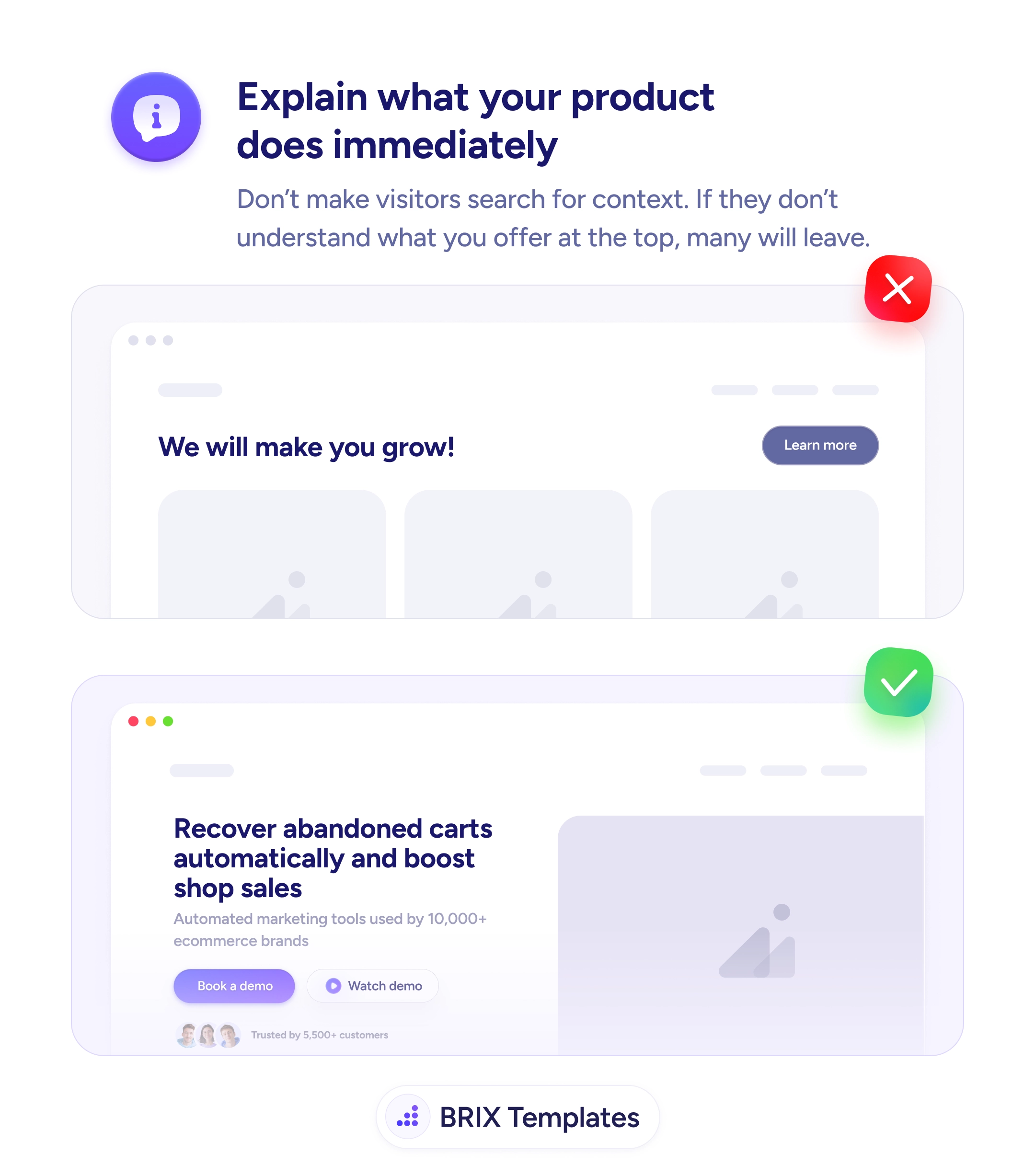
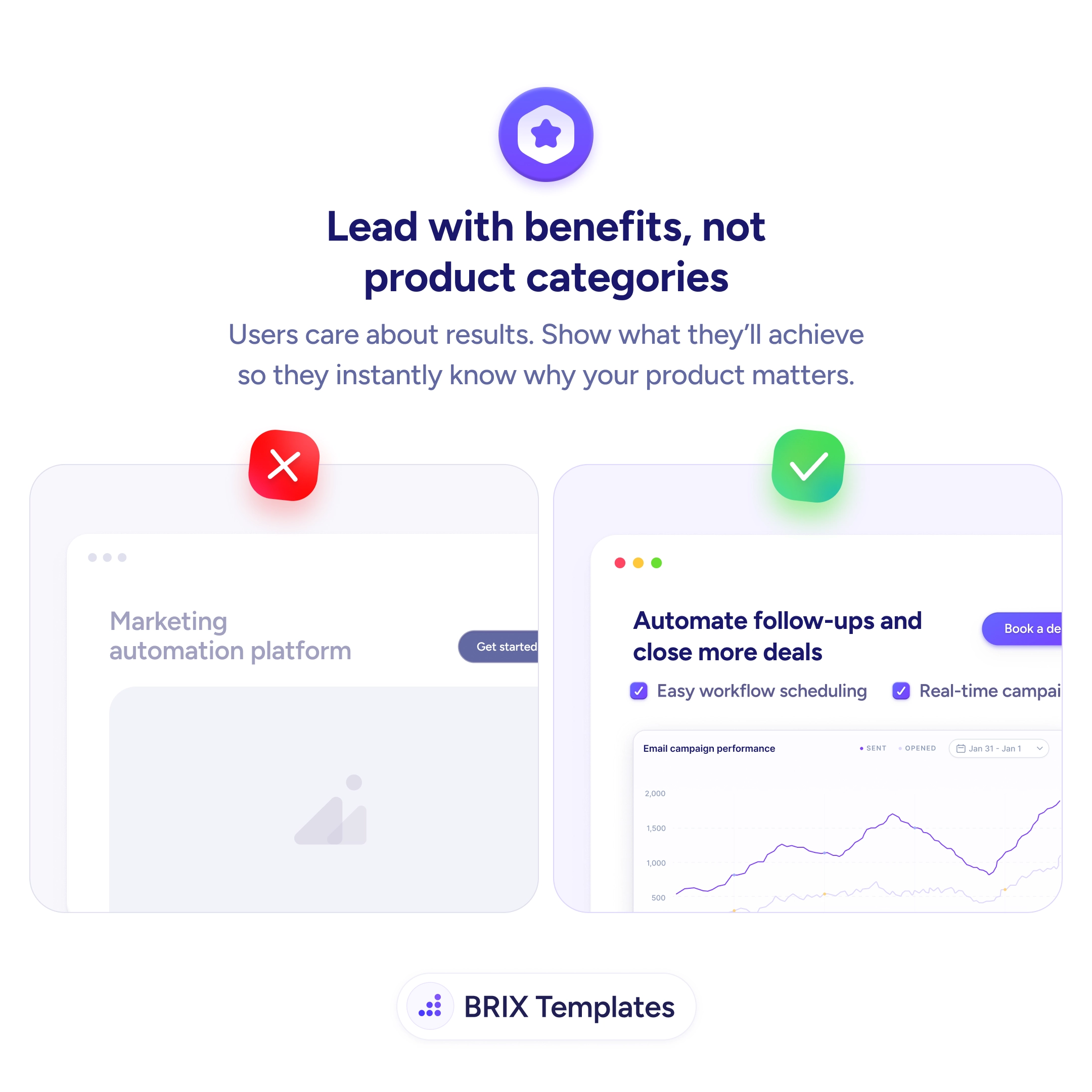
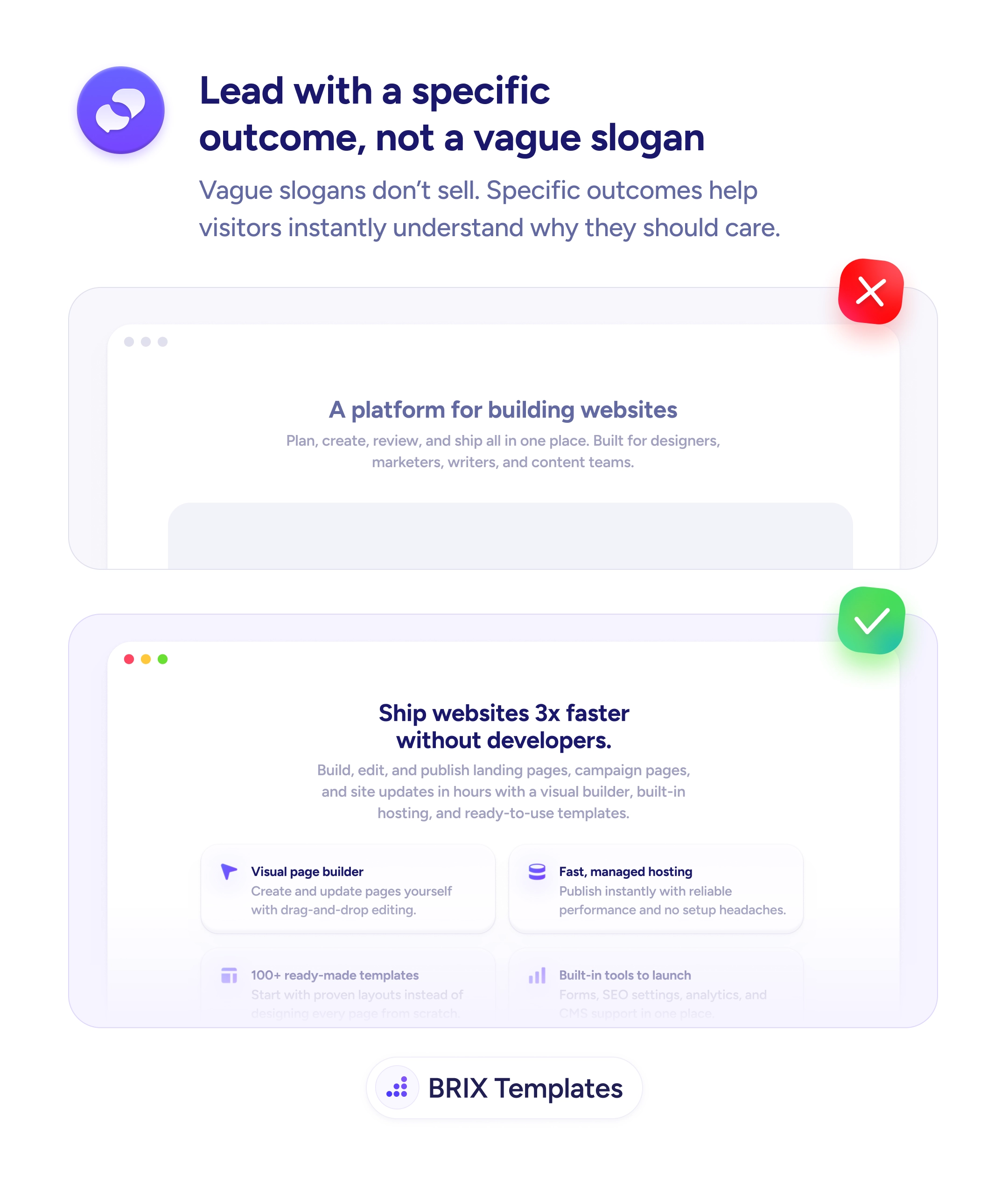
When a hero section opens with a vague slogan like “A platform for building websites,” visitors have to interpret the value themselves. They don’t yet know if the product is for them, what it actually delivers, or how it differs from anything else in the category. In the few seconds most users spend on a hero, that interpretive work doesn’t get done — they scroll past, leave, or assume the page isn’t relevant to their goal.
A more effective approach is to lead with a specific outcome the user gets from the product. Specific hero copy like “Ship websites 3x faster without developers” names the result, the magnitude, and the obstacle removed — all in one sentence. Visitors don’t have to decode the value because the headline does the decoding for them. Pair this with a supporting paragraph that lists concrete deliverables (“landing pages, campaign pages, site updates”) and the page becomes scannable proof for the headline’s promise.
Replace category labels with measurable outcomes — numbers, time frames, or removed obstacles all ground the claim. Use the supporting paragraph to back up the headline with concrete deliverables so the outcome doesn’t feel aspirational. Avoid jargon and abstract language — “ship websites” beats “create digital experiences” because it names the actual job. Test the headline against your audience’s words — if the line wouldn’t pass on a customer call, it probably won’t pass on a landing page either.
A hero that leads with a specific outcome can do the work of explanation, qualification, and differentiation in a single line. When visitors recognize their goal in the headline, they typically read further — instead of guessing whether the page is for them.
Slogan: 'A platform for building websites.' Outcome: 'Ship websites 3x faster without developers.' The first names the category; the second names the result, magnitude, and obstacle removed.
No — testimonials add proof, but only after the headline has earned the visitor's attention. A vague headline plus great testimonials still loses visitors who never read past the slogan.
Don't fabricate. Use a less aspirational but still concrete claim — 'Build a landing page in under an hour' is better than '10x your conversions' if you can't back the latter up.
Ask customers what they say to peers when recommending the product. The answer is rarely 'a platform for X' — it's usually a specific outcome they got. That's the headline.