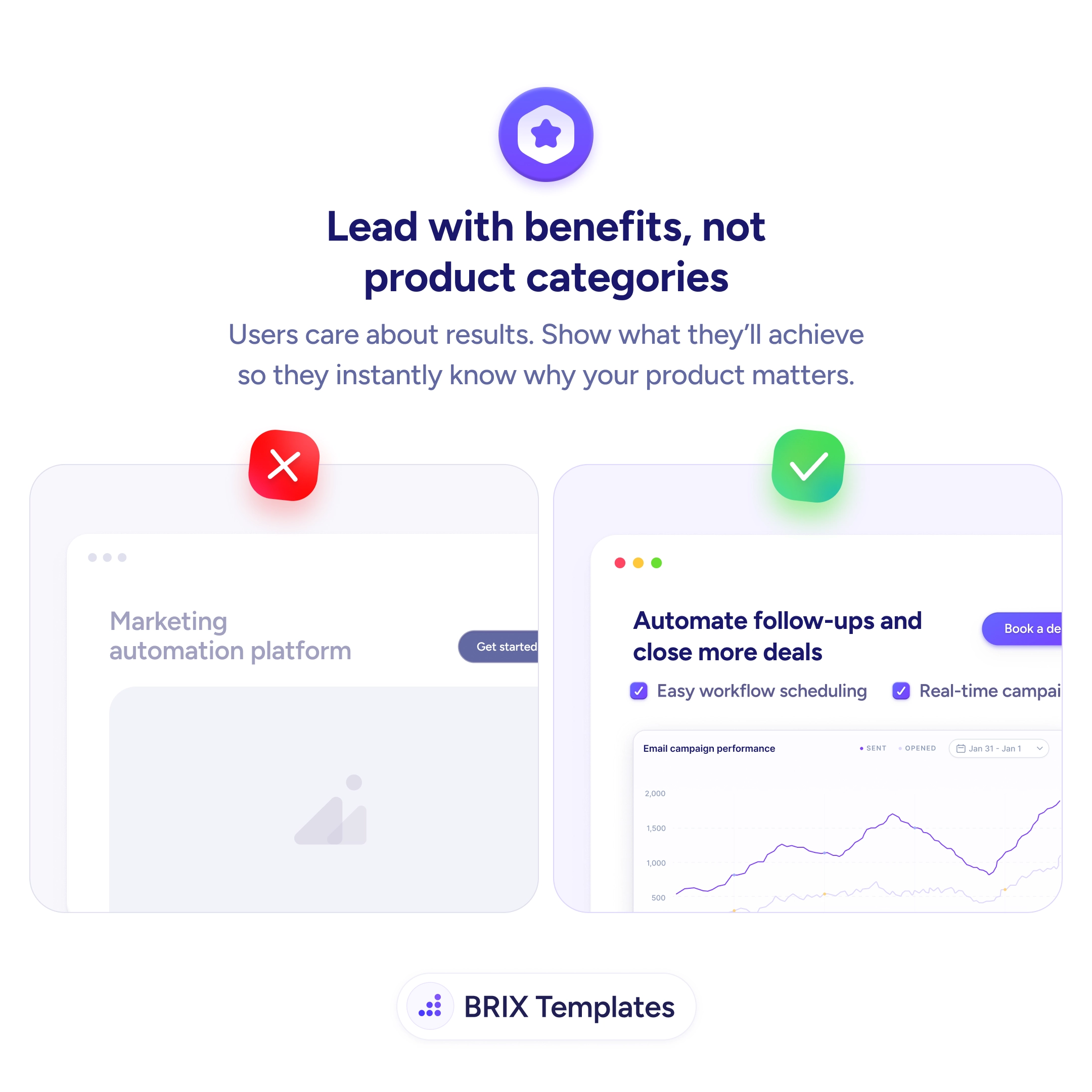
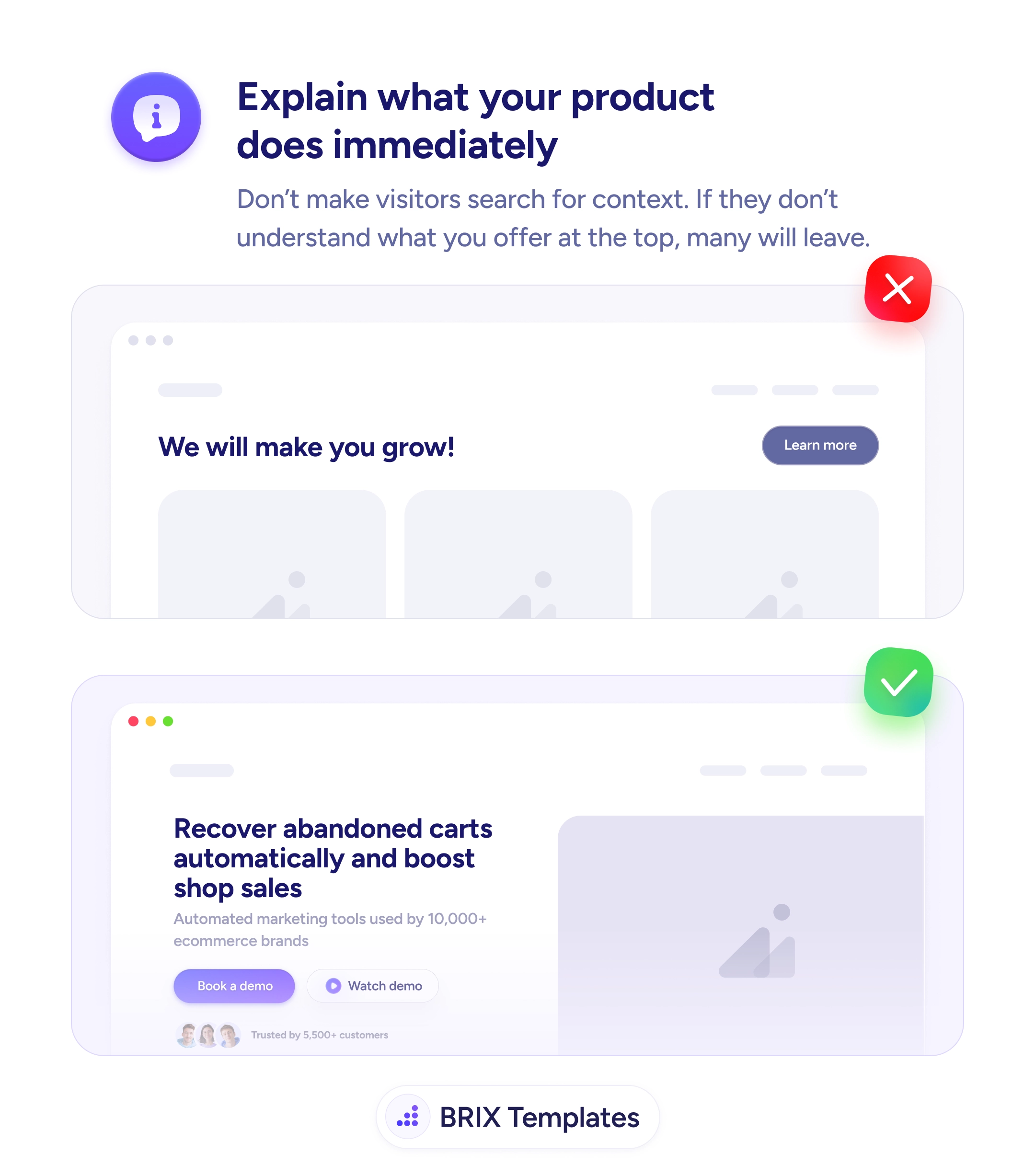
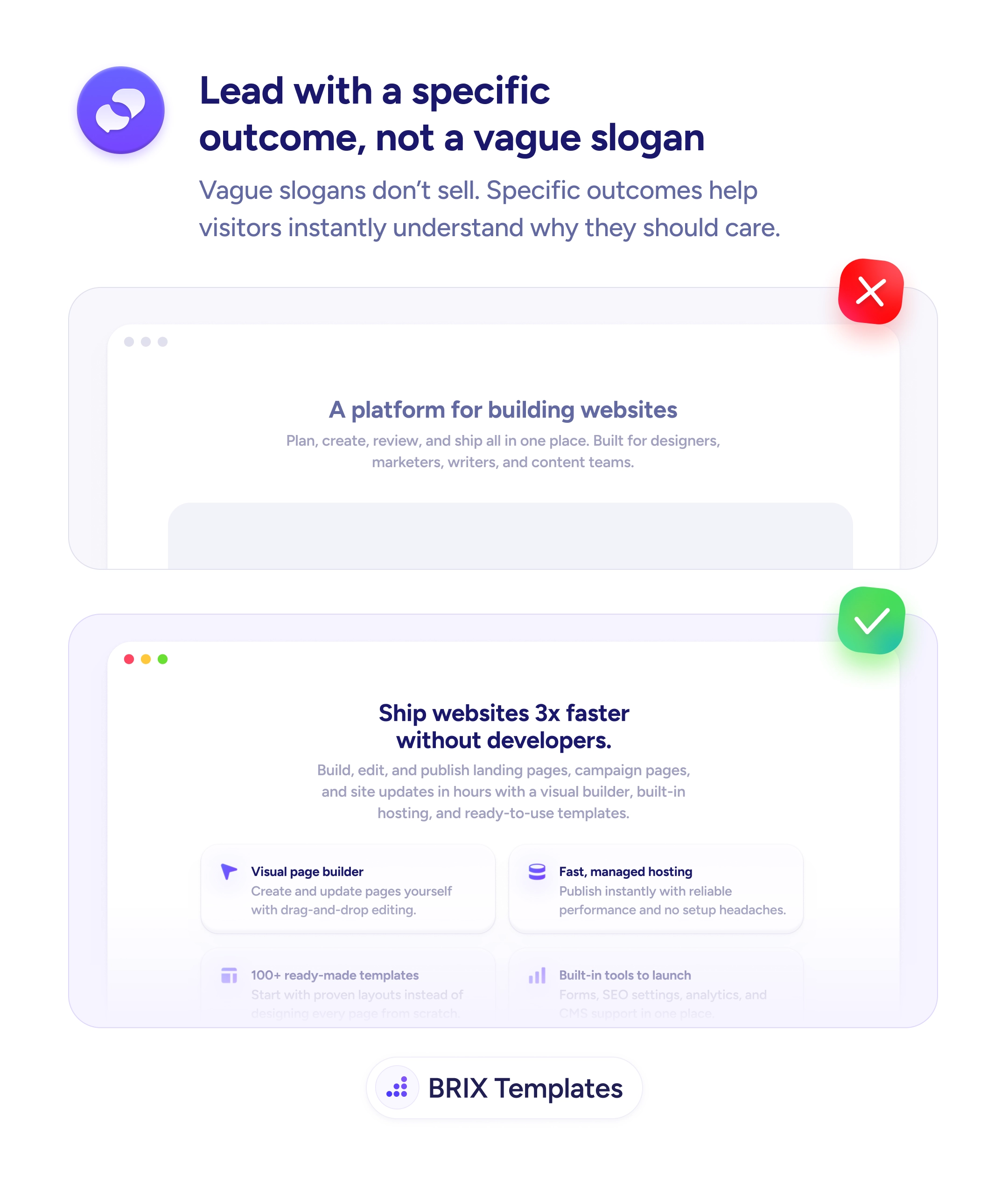
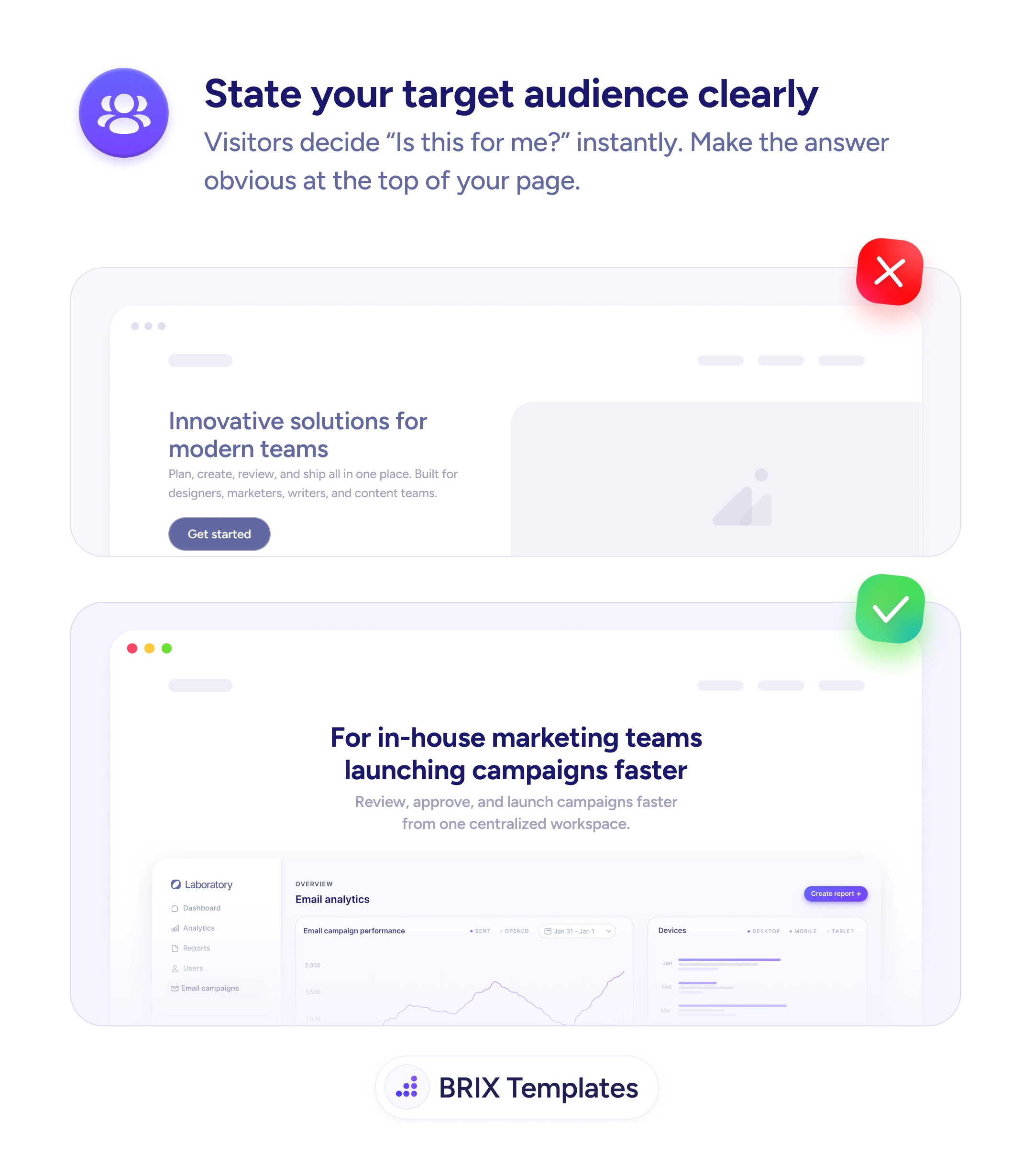
When a hero opens with a product category like “Marketing automation platform,” it answers the question “what is this product?” but skips the question visitors actually care about — “what will it do for me?” Category-led copy assumes the visitor already understands what the category delivers, what’s typical in the space, and how to map it onto their own work. Many visitors don’t have that context, especially first-time buyers, and they leave before doing the translation themselves.
A more effective approach is to lead with the benefit — the specific outcome the user gets from using the product. Benefit-led headlines like “Automate follow-ups and close more deals” name the action, the object, and the result in one phrase. The visitor doesn’t have to translate “marketing automation platform” into “this will help me close more deals” — the headline does that work upfront. Pair the benefit with concrete capabilities (“Easy workflow scheduling,” “Real-time campaigns”) and the page becomes scannable proof for the headline’s promise.
Replace the category label with the user’s outcome — what they’ll actually do or achieve. Lead with a verb that names the action (“automate,” “close,” “track”) so the headline feels active. Reinforce the benefit with feature checkmarks below the headline so visitors can verify the claim. Skip generic category framing — it competes with every other product in the same space and doesn’t differentiate yours.
- Replace category labels with benefit-led copy that names the user’s specific result.
- Lead with a verb that describes the action or outcome (“automate,” “close,” “track”).
- Reinforce with concrete capabilities — checkmark lists, key features, or data visualizations make the benefit verifiable.
- Avoid generic category framing like “X platform” or “X solution” — they describe the product type, not the value.
- Mirror the words your customers use when describing wins to peers — that’s usually closer to a benefit than to a category.
A hero that leads with benefits can communicate value faster than a hero that names the category. When the outcome is the first thing visitors see, they typically know within seconds whether the product matters to them — and that decision happens before they have to interpret what category your product fits into.