Help & onboarding
A hero that doesn't say what the product does is a hero that says nothing
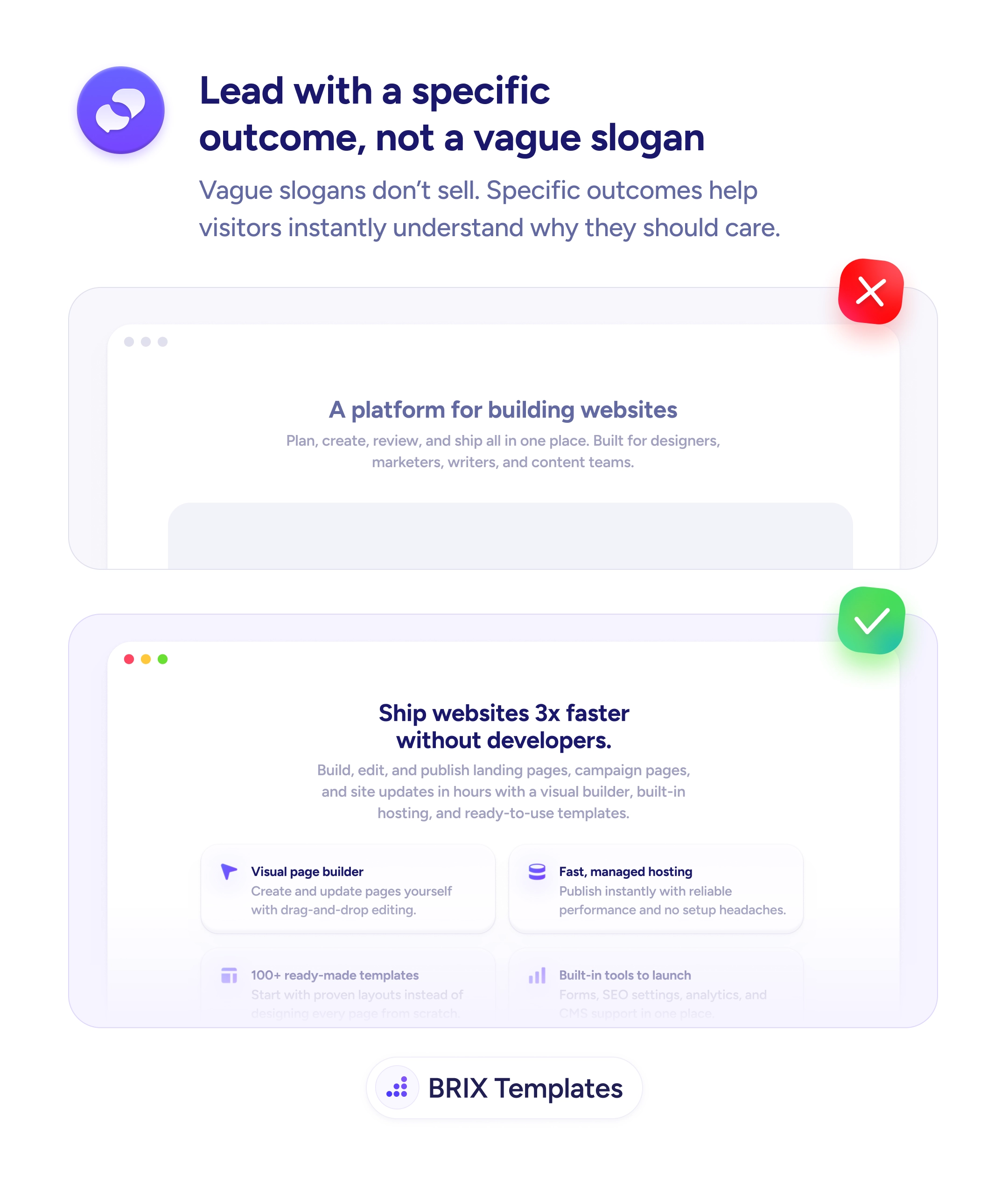
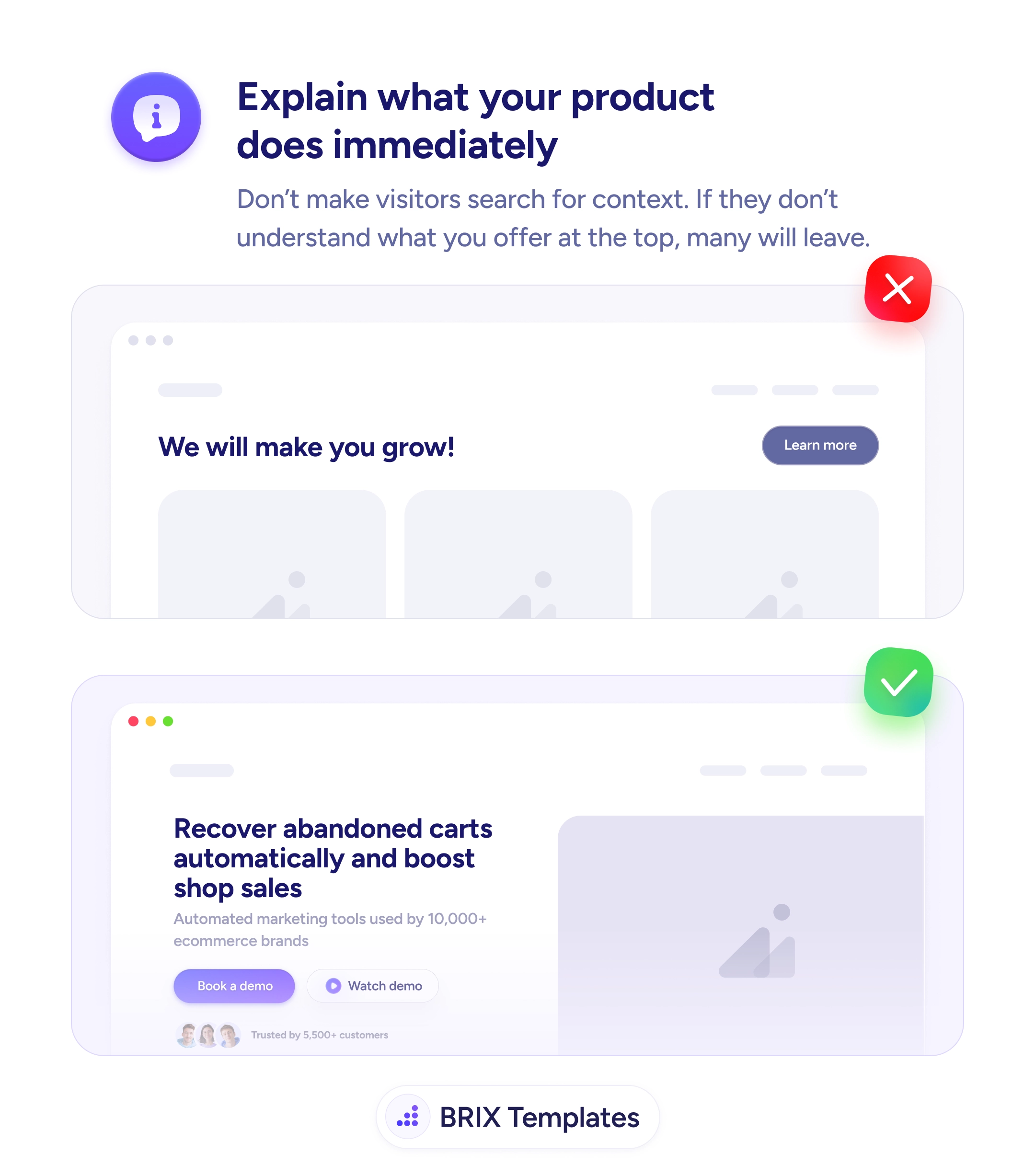
Slogans like "We will make you grow" leave visitors guessing what your product does. Lead with a functional description so they understand the offer.

Help & onboarding
A hero that doesn't say what the product does is a hero that says nothing
Slogans like "We will make you grow" leave visitors guessing what your product does. Lead with a functional description so they understand the offer.
When a hero opens with enthusiasm-led copy like “We will make you grow!” visitors learn how the company feels about its own product but nothing about what the product actually does. The headline doesn’t name the function, the audience, or the result — so the visitor is left trying to figure it out from feature cards, button labels, or whatever else lives on the page. Many won’t bother. They’ll scan, fail to identify the offer, and move on.
A more effective approach is to explain what the product does in the hero copy itself. Functional hero headlines like “Recover abandoned carts automatically and boost shop sales” answer the visitor’s first question — “what is this?” — without requiring any work. The verb (“recover”) names the action, the object (“abandoned carts”) names the use case, and the result (“boost shop sales”) names the outcome. Three pieces of useful information, one sentence, no guessing.
Lead with a verb that describes the actual job the product does. Name the object the product acts on — carts, emails, contracts, leads — so visitors recognize their own context. Pair the function with the result so the headline carries both mechanism and motivation. Add a proof point right below the hero — a customer count, a recognizable logo, a specific stat — to ground the functional claim in evidence.
A hero that explains what the product does can answer the visitor’s first question before they even ask it. When the function is clear in the first read, users typically continue down the page — and the ones who don’t are usually the wrong audience anyway, which is also a useful filter.
Slogans don't reduce the visitor's uncertainty about what the product does. Visitors who don't know what the product is typically don't invest the effort to figure it out — they just leave.
It feels more useful, which usually beats inspiring on a landing page. Visitors aren't there to be motivated — they're there to evaluate fit. A functional headline lets them do that quickly.
Use a comparison: 'Like X for Y' or 'The [familiar thing] for [your audience].' Familiar references give visitors a starting point even when the product itself doesn't fit an existing category.
Look at customer support tickets, sales calls, or churn interviews. The way users describe the product in their own words is usually a better headline than what marketing or product would write.