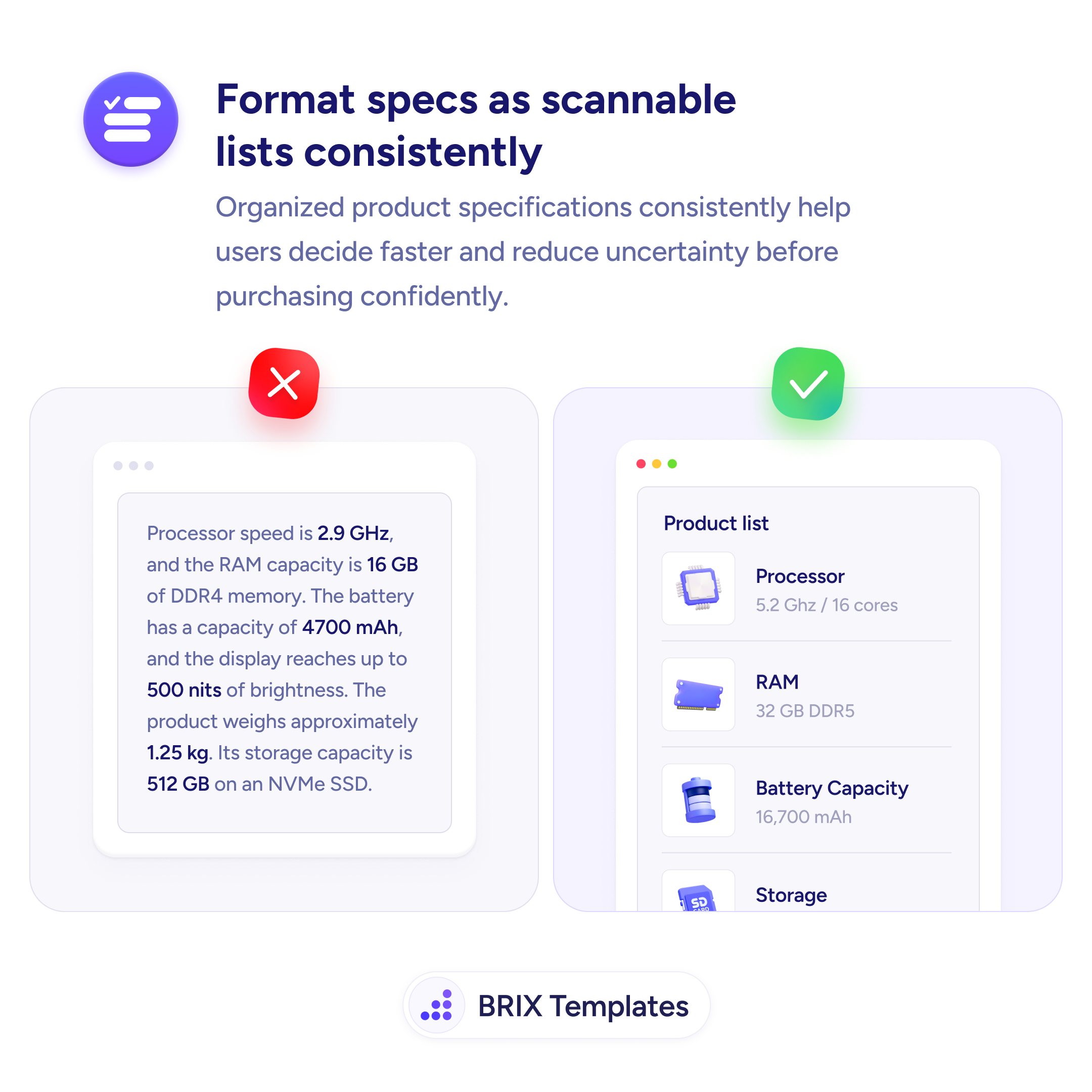
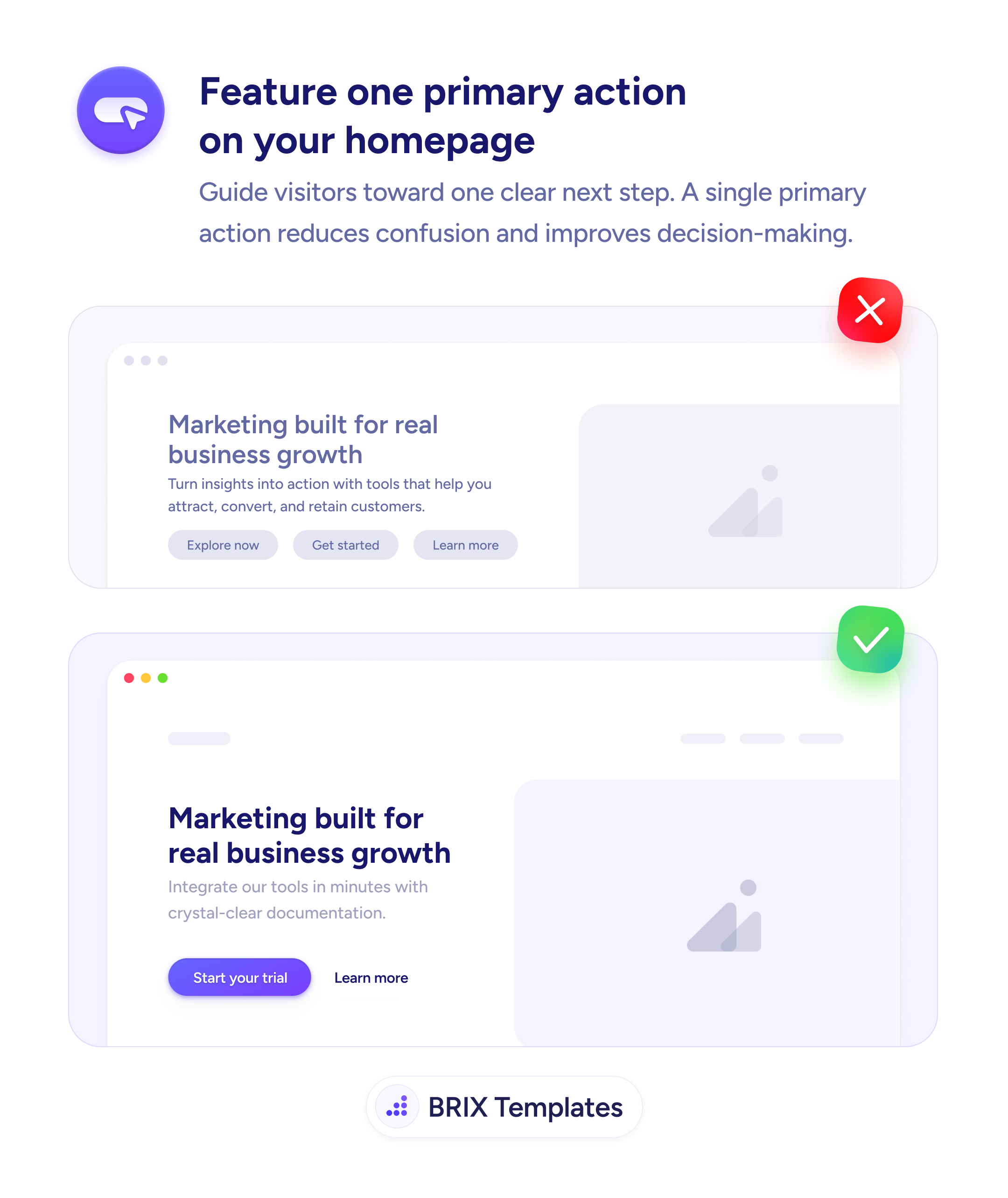
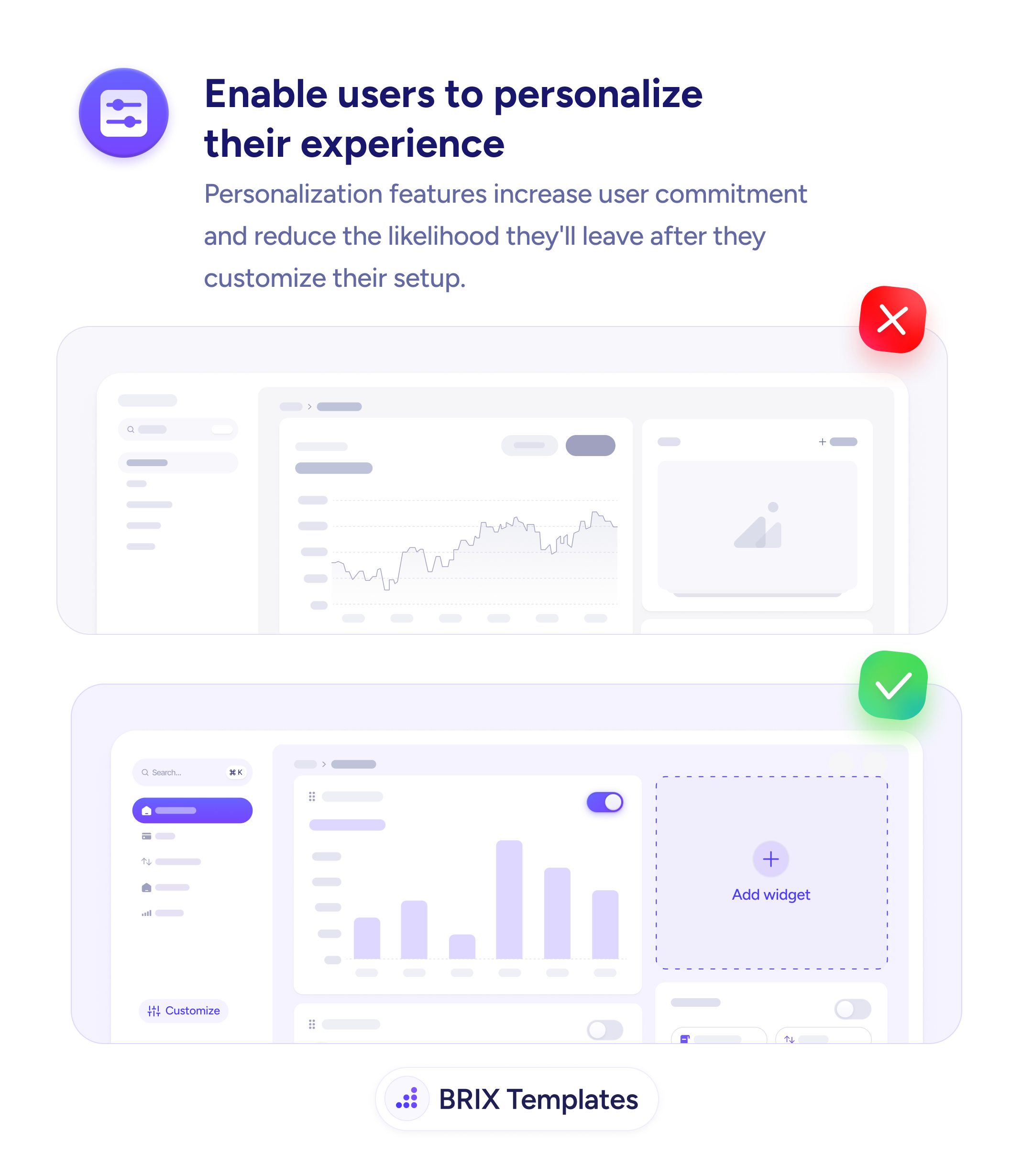
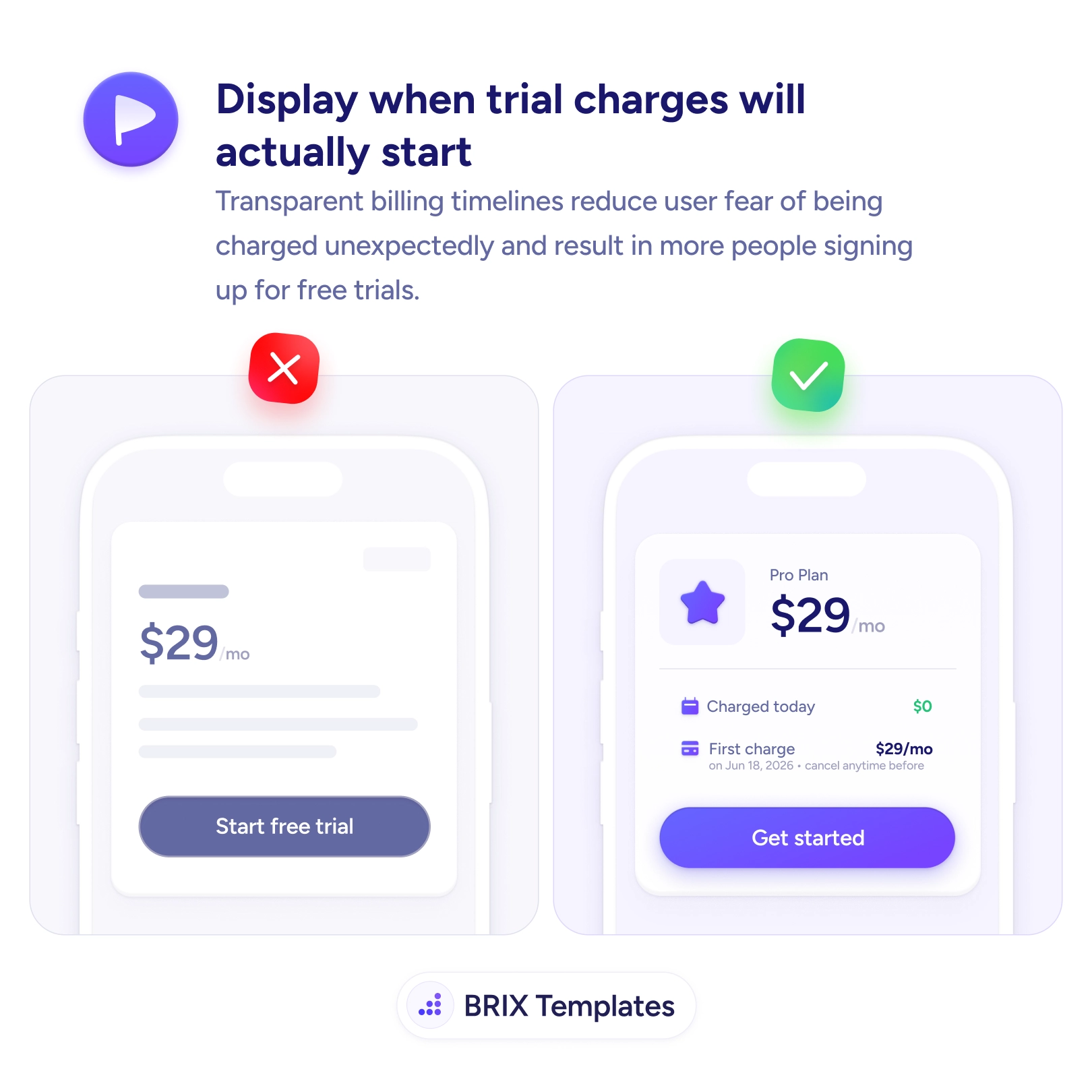
UX tip graphic titled 'Display when trial charges will actually start.' The left panel marked with a red X shows a mobile screen with a bare '$29/mo' price, a few placeholder text lines, and a 'Start free trial' button — no billing detail. The right panel marked with a green checkmark shows a Pro Plan card priced '$29/mo' with a billing breakdown: 'Charged today $0' in green and 'First charge $29/mo on Jun 18, 2026 · cancel anytime before,' above a 'Get started' button. BRIX Templates branding at the bottom.

Checkout & payments

The fear behind 'start free trial' isn't the price — it's not knowing when the price kicks in

Vague free trials make users fear a surprise charge. Show 'charged today: $0' and the exact first-billing date so more people feel safe signing up.

How to show when trial charges will start

A signup that shows a bare “$29/mo” and a “Start free trial” button leaves the scariest question unanswered: when does the charging actually begin? For most people the blocker to trying a paid product isn’t the price itself — it’s the fear of a surprise charge landing before they remember to cancel. A vague trial screen leaves that fear intact, and a fearful user closes the tab instead of starting.

The fix is to make the billing timeline explicit at the point of signup. A small breakdown — “Charged today: $0,” “First charge $29/mo on Jun 18, 2026 · cancel anytime before” — turns an anxious unknown into a clear, controllable plan. When the user can see that nothing happens today, exactly when the first charge lands, and that cancelling beforehand is free, the risk they were bracing for disappears and more of them feel safe enough to begin.

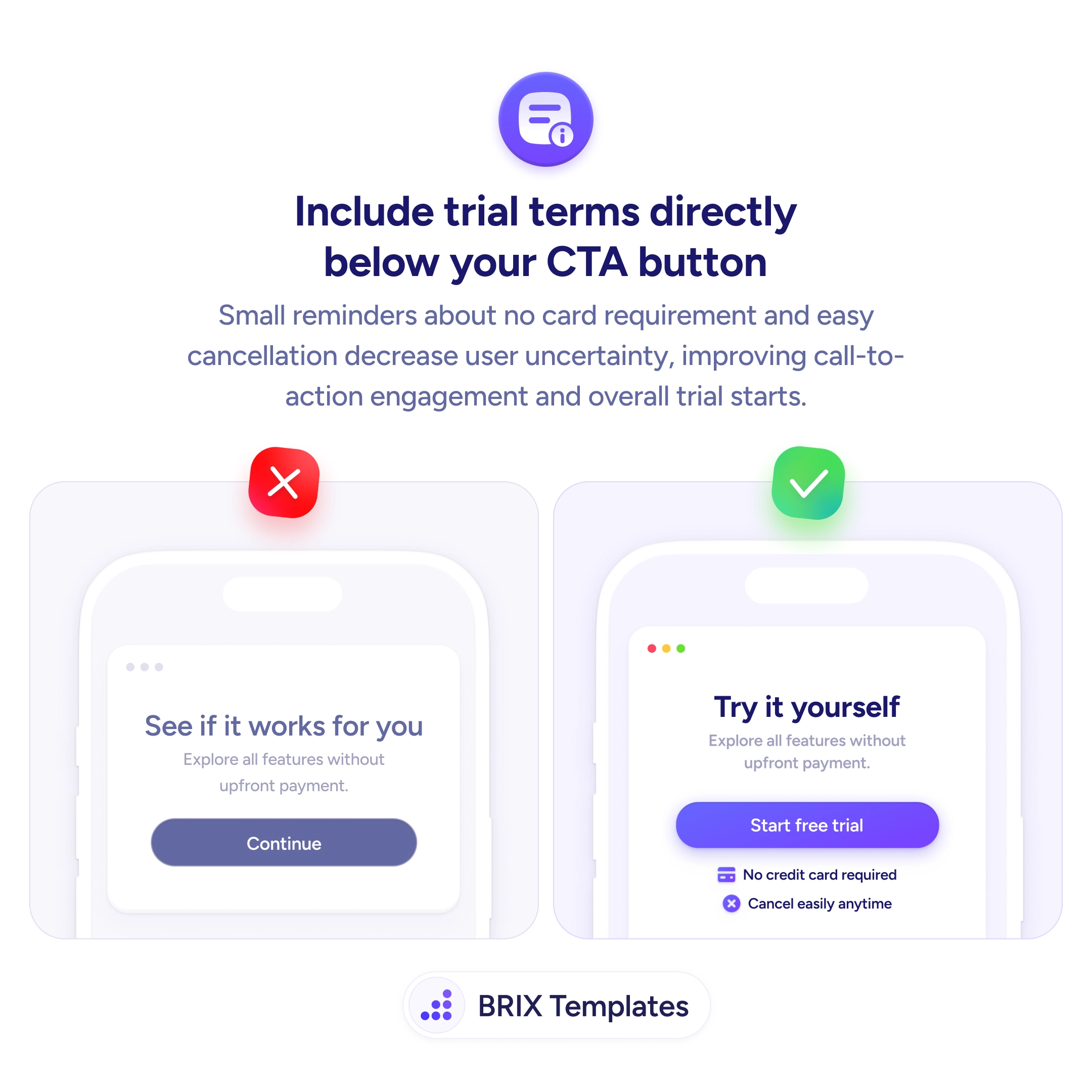
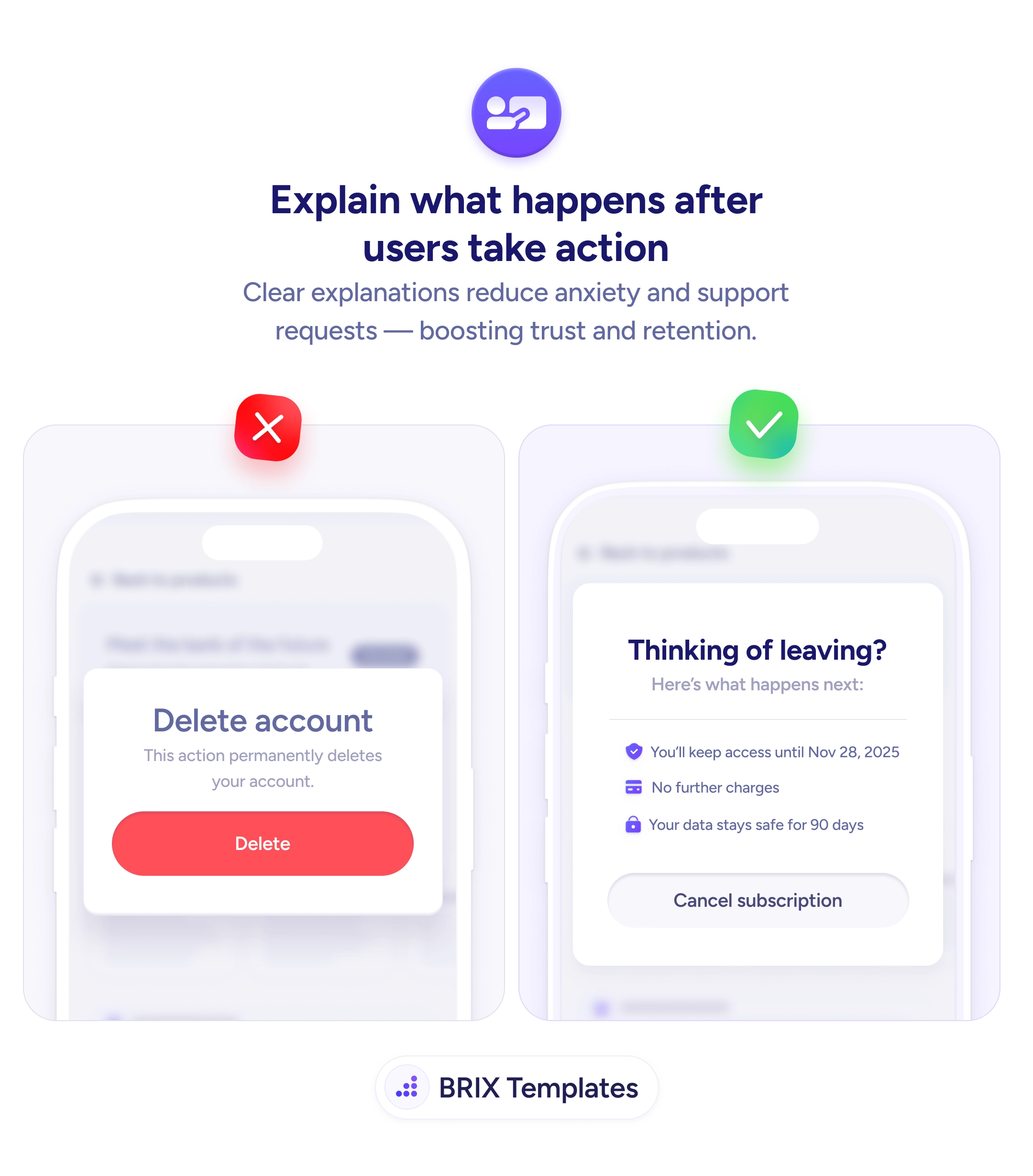
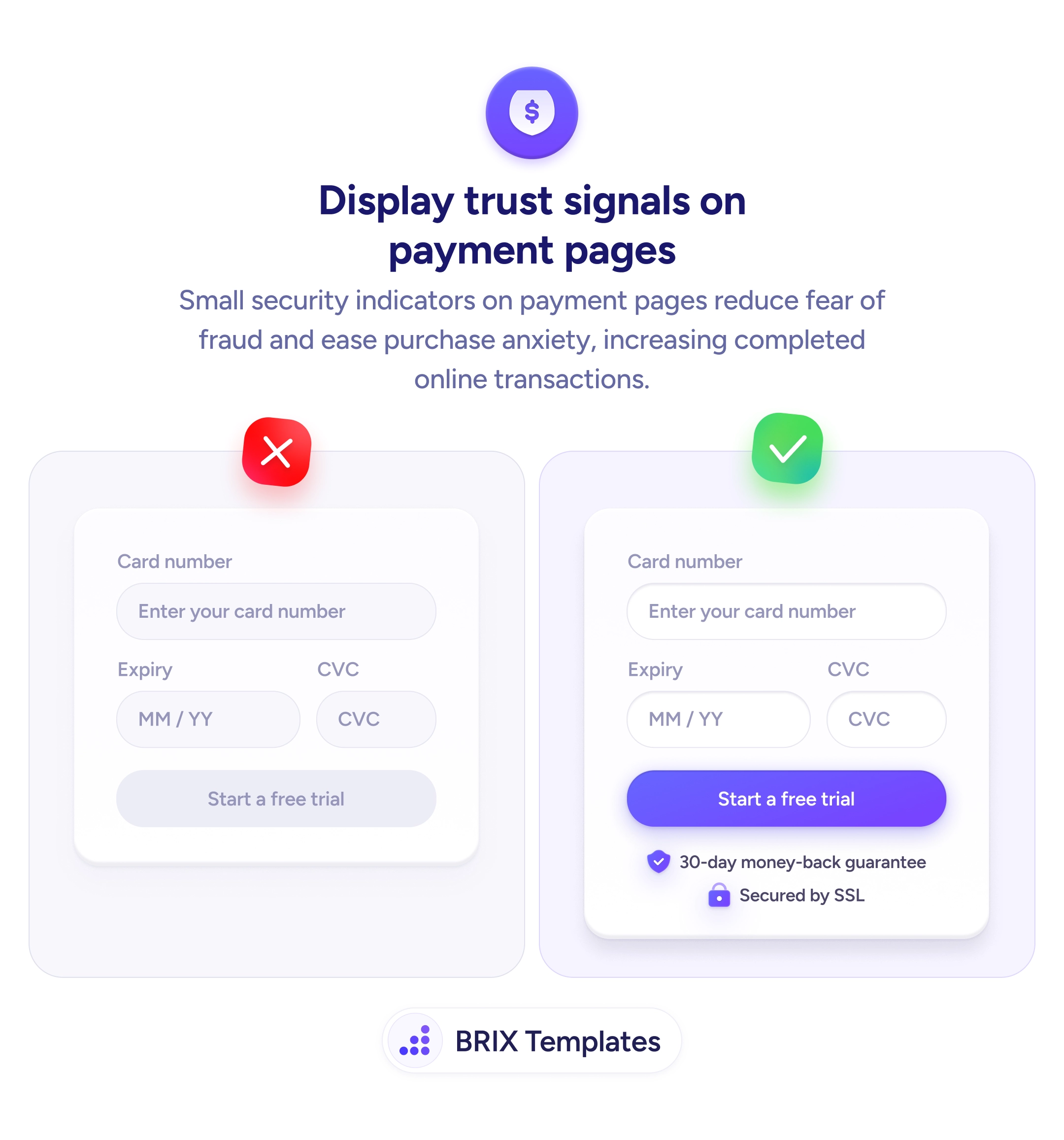
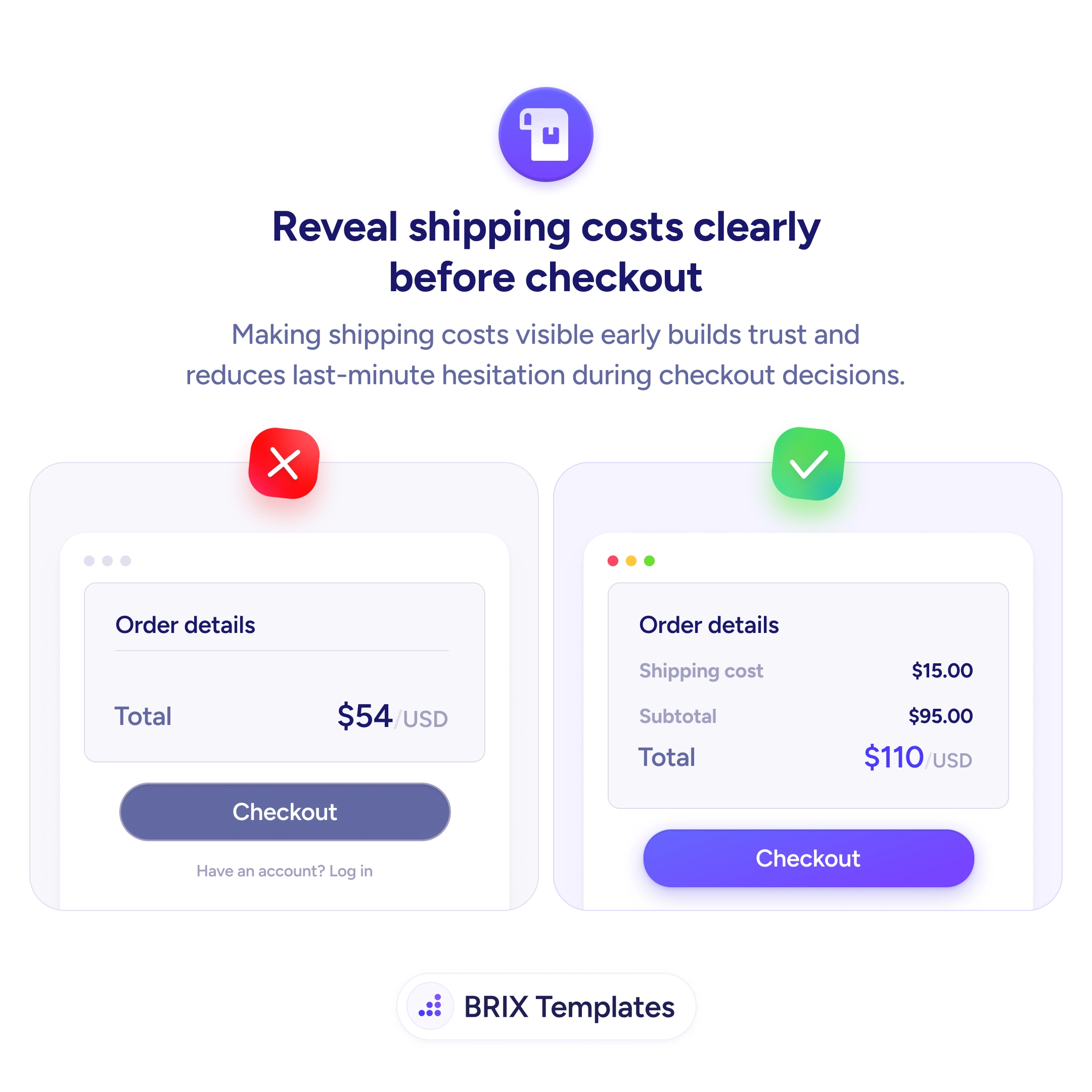
This is the same move as trial microcopy under the CTA — “no card required,” “cancel anytime” — made specific with a real date, and it shares the logic of showing costs up front rather than as a late surprise. Follow through past signup too: a reminder email a few days before billing honors the trust the date earned and prevents the “I forgot” charge that turns into a refund request or chargeback.

  • Show “charged today: $0” so the user sees the trial truly costs nothing now.
  • Name the exact first-charge date and amount — specificity is what calms the fear.
  • Say cancelling before then is free to make the risk feel controllable.
  • Send a pre-billing reminder so the upfront honesty carries through to the charge.
  • Treat transparency as retention — a few voluntary cancels beat surprise chargebacks.

Frequently asked questions

Why show the exact trial billing date?

Because the main thing holding people back from a free trial isn't the eventual price — it's the fear of being charged unexpectedly before they remember to cancel. A specific 'charged today: $0' and 'first charge on Jun 18' replaces that anxiety with a clear, controllable timeline. When users can see exactly when billing starts and that they can cancel before then, more of them feel safe enough to sign up.

What details make a trial feel safe to start?

Three things, stated plainly near the button: that nothing is charged today, the exact date and amount of the first charge, and that cancelling before that date costs nothing. Concrete beats vague — 'First charge $29/mo on Jun 18, 2026 · cancel anytime before' answers the questions a nervous user is actually asking. A generic 'start free trial' with a lone price leaves all of them open.

Should I still send a reminder before charging?

Yes — showing the date at signup and reminding before the charge work together. The upfront date earns the signup; a reminder email a few days before billing honors the trust and prevents the 'I forgot' charge that leads to refund requests, chargebacks, and cancellations. Transparent billing is a full-timeline commitment, not a one-time line on the signup screen.

Won't reminding people just make them cancel?

Some will, but the ones who'd have been surprised into a chargeback or an angry refund are the costliest outcomes — and they damage trust and payment-provider standing. Clear dates and reminders trade a few forced, resentful renewals for a base of users who feel treated fairly. That honesty tends to improve retention and word of mouth more than a hidden charge ever helps revenue.