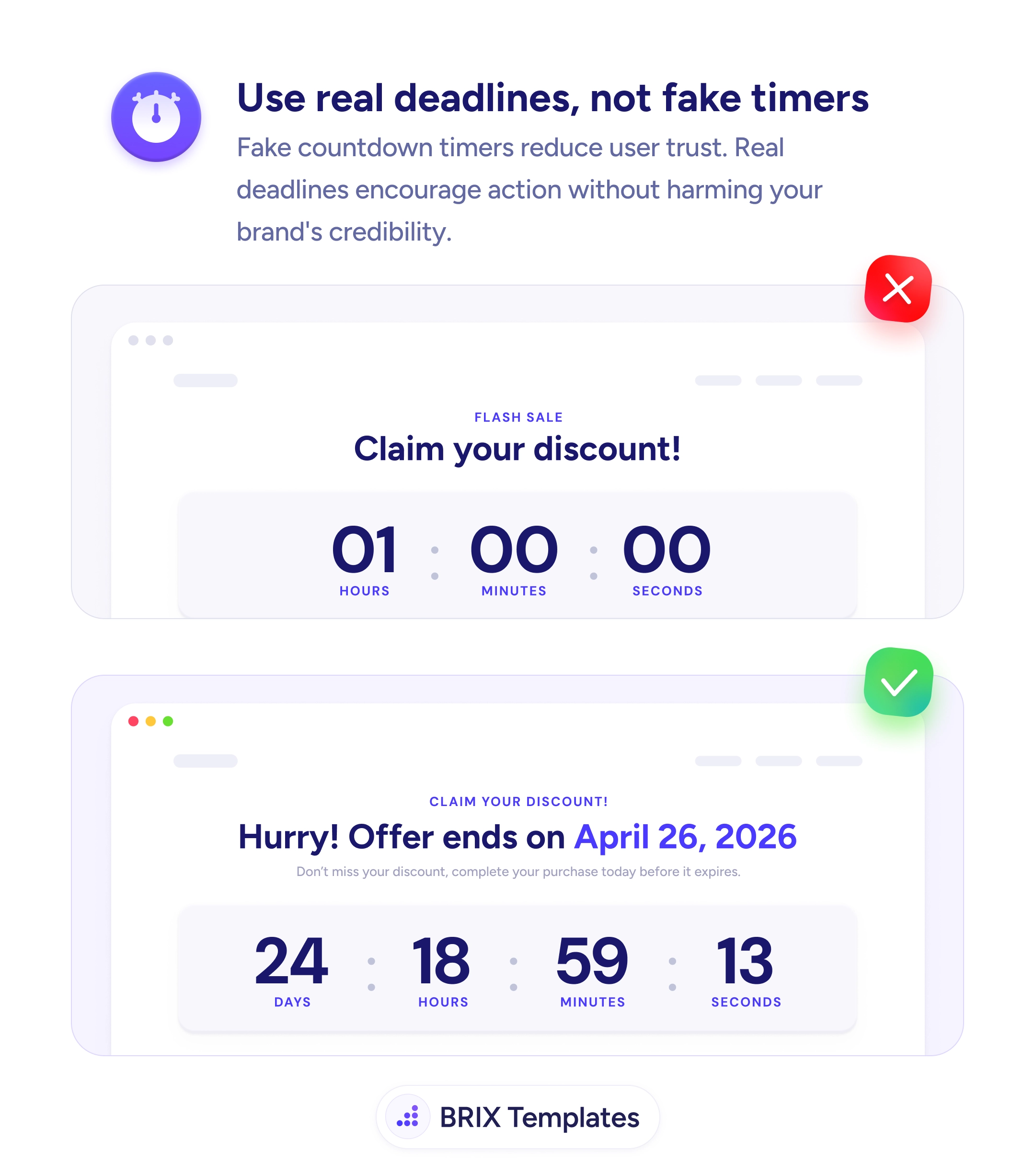
A countdown that reads “01:00:00” and resets to a fresh hour every time the page reloads is a lie the user eventually catches. Fake urgency works exactly once — until someone comes back tomorrow and sees the same “last hour,” or refreshes and watches the clock jump back to sixty minutes. The moment the trick is spotted it doesn’t just fail; it poisons every other claim on the page, because now the whole offer looks manufactured.
The fix is to anchor urgency to a real, fixed deadline. “Offer ends April 26” — with a countdown that genuinely runs down to that date and stays expired afterward — creates pressure that survives scrutiny. Because it’s true, it holds up on a second visit, a shared link, or a refresh. Real scarcity motivates just as well as the fake kind, and it does it without spending the trust you’ll need to close the sale.
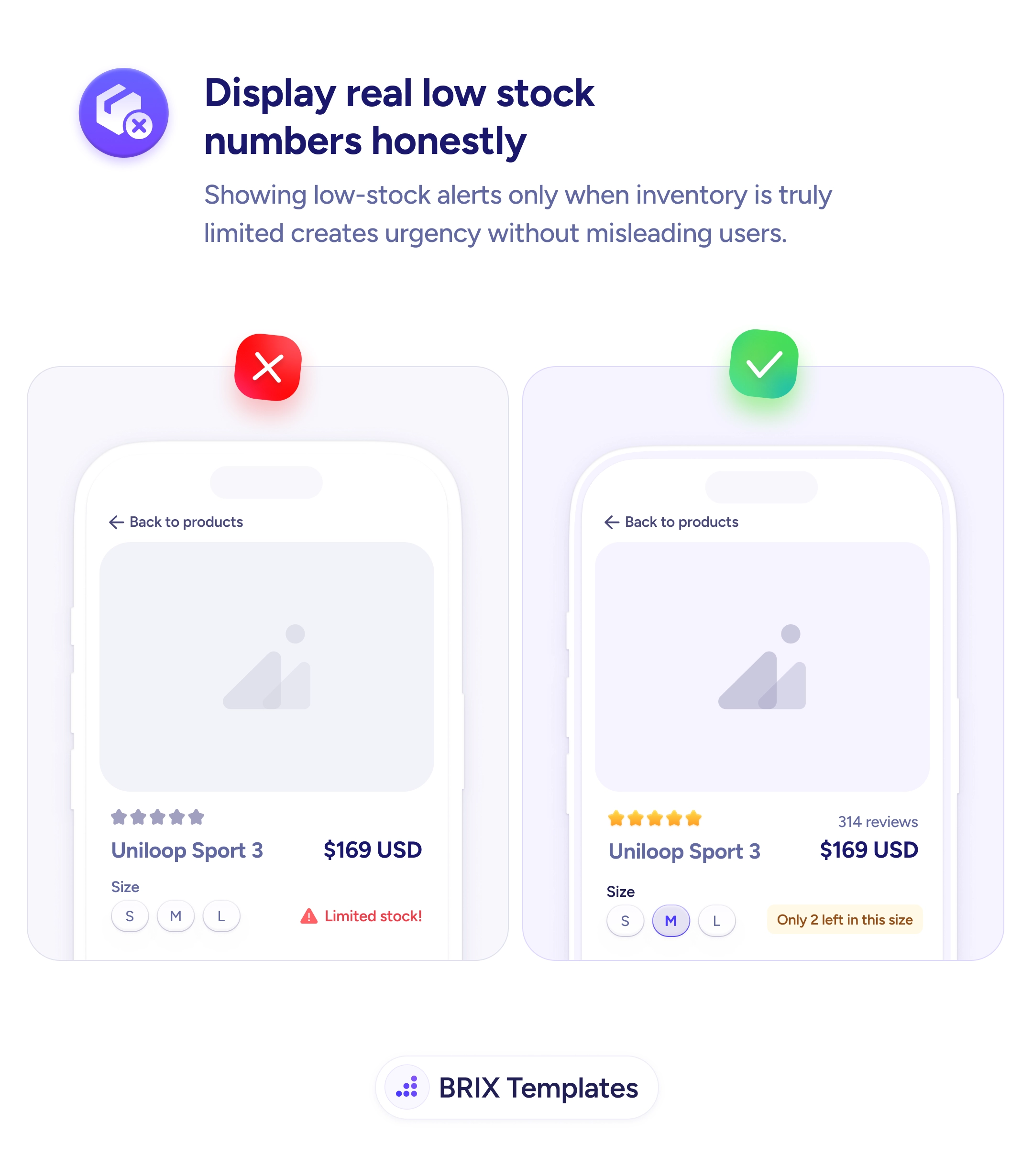
Start by tying every timer to an actual event — a sale end date, a cohort start, a genuine stock cutoff — and letting it expire honestly when the time passes. Never reset the clock per session or invent a deadline that renews forever; that’s the tell users learn to distrust. Treat urgency as a claim that has to be verifiable, the same standard behind low-stock alerts that build trust and backing up every claim with proof.
- Tie the countdown to a real date or event, not a rolling per-session timer.
- Let it expire honestly — a deadline that renews forever teaches users to ignore it.
- State the actual end (“ends April 26”) so the urgency is checkable, not just felt.
- Reserve urgency for genuine scarcity — overusing it on everything drains its power.
- Protect credibility first — one caught fake timer casts doubt on the whole page.