Help & onboarding
Vague claims read like brochure copy — specific numbers read like proof
Adjectives like 'amazing' and 'better' get ignored. Replace vague claims with concrete numbers so visitors trust the page instead of skimming past it.

Help & onboarding
Vague claims read like brochure copy — specific numbers read like proof
Adjectives like 'amazing' and 'better' get ignored. Replace vague claims with concrete numbers so visitors trust the page instead of skimming past it.
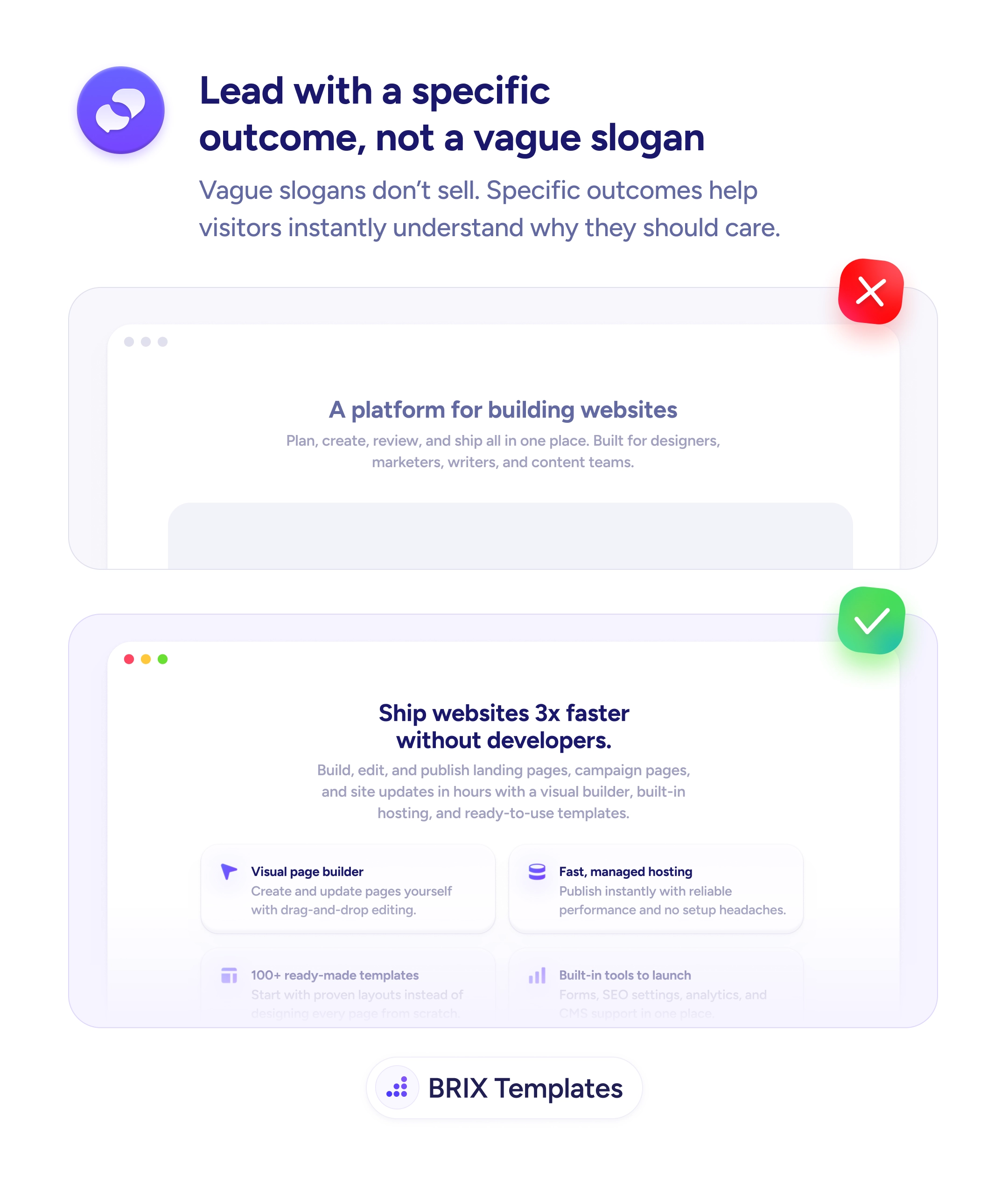
When a hero section leans on adjectives — “amazing websites”, “better ROI”, “loved by customers” — every visitor reads roughly the same thing: marketing copy without evidence. The brain has seen these phrases on hundreds of landing pages and learned to filter them out. The reader scans past, skeptical that anything underneath is more substantial, and the page loses its first chance to earn trust. Vague claims don’t just fail to persuade; they actively erode credibility by sounding like everyone else.
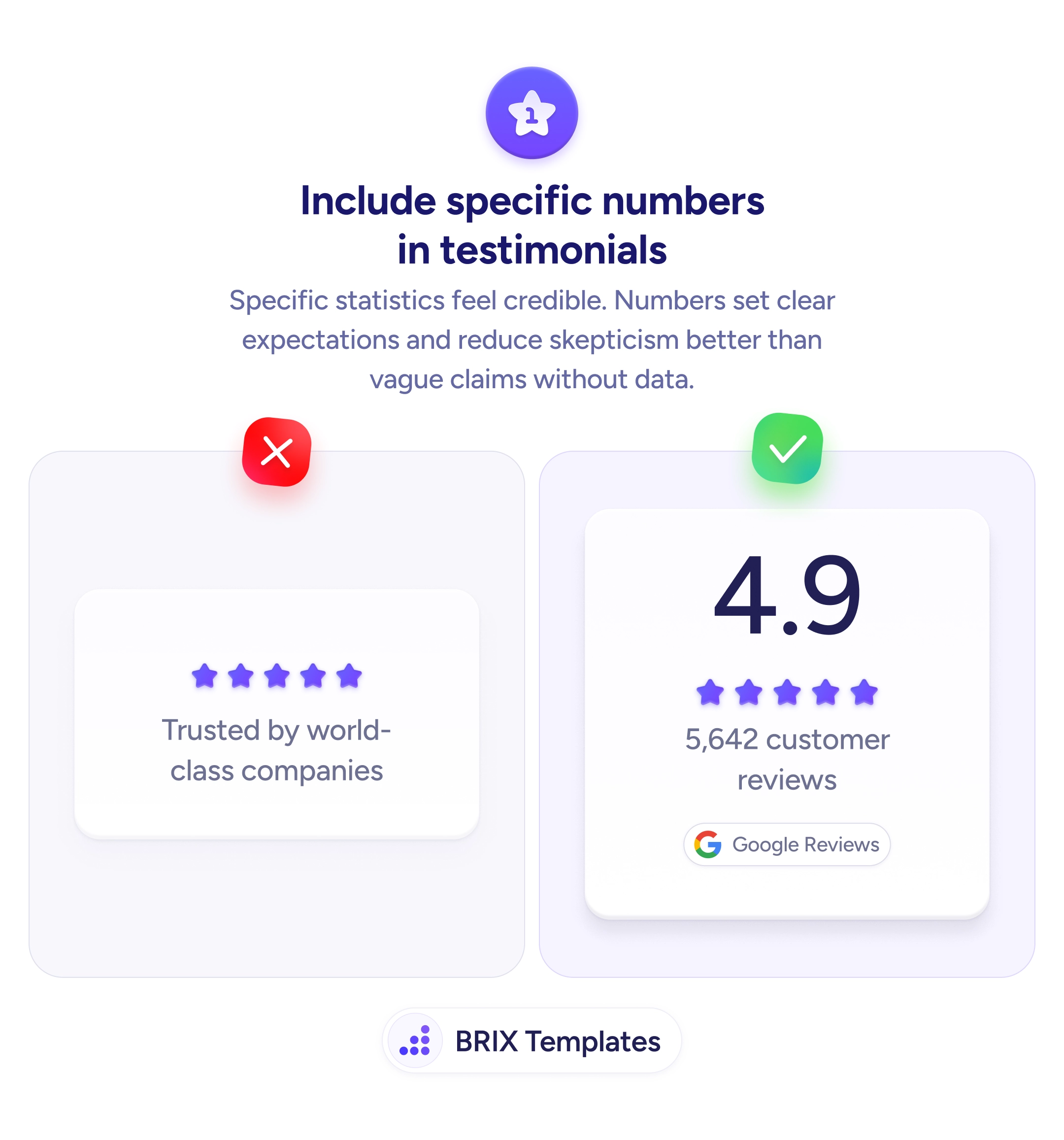
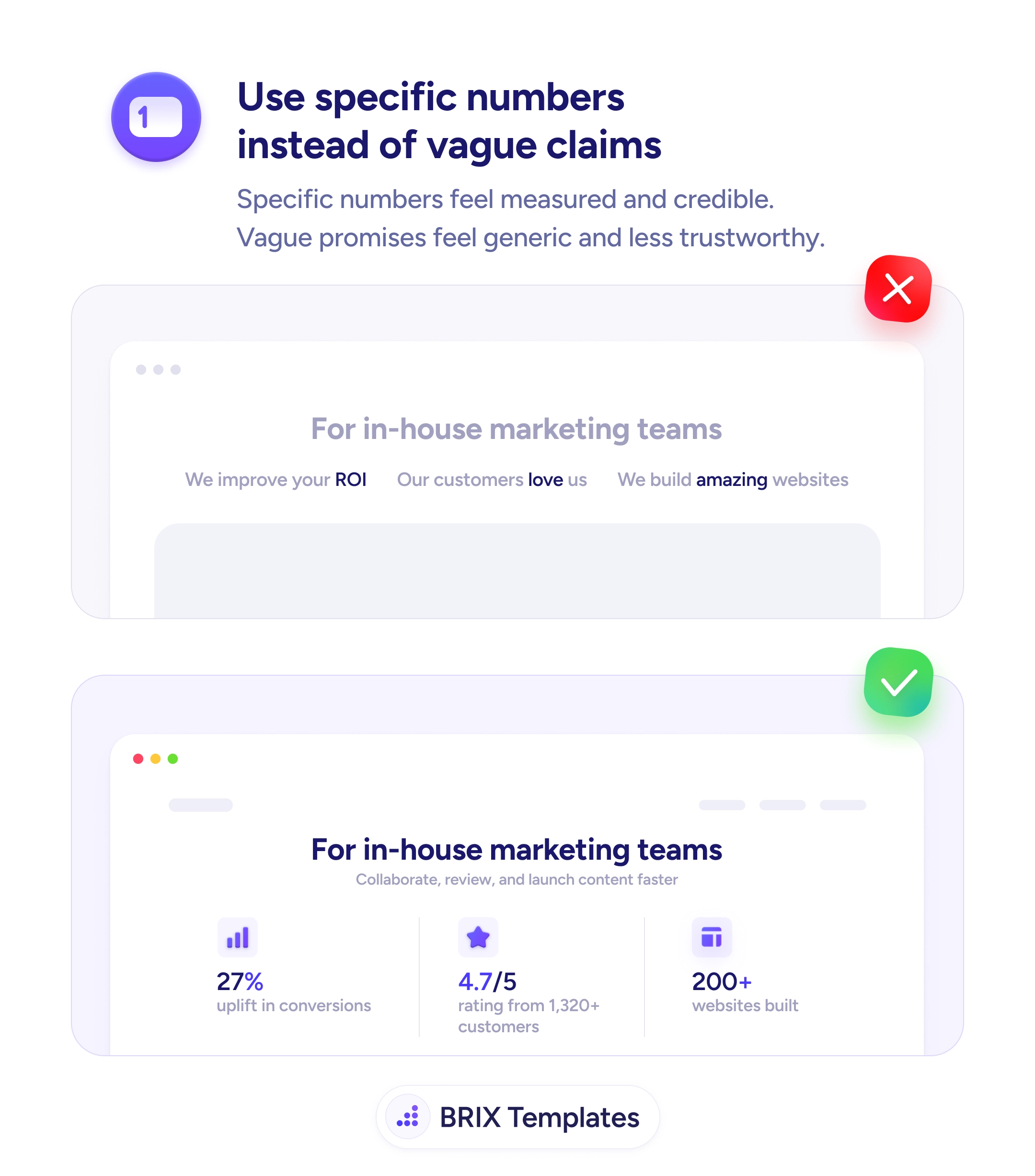
A more effective pattern is to replace vague claims with concrete numbers that quantify the same idea. “27% uplift in conversions” replaces “We improve your ROI”; “4.7/5 from 1,320+ customers” replaces “Our customers love us”; “200+ websites built” replaces “We build amazing websites”. The numbers do two things at once: they make the claim verifiable in feeling, and they signal that the company actually measures the thing it’s claiming. The page reads as a team with data, not a team with adjectives.
Audit each hero line for adjectives that could be numbers: “fast” → time saved, “loved” → rating + review count, “trusted” → customer count or named clients, “better” → percentage uplift versus a baseline. Use the numbers you actually have, even when they’re small — “12 customers, 5-star average” outperforms “Loved by many” on credibility. Spread the proof across categories — outcome, volume, credibility — so the page covers more dimensions of trust than three repeats of the same metric.
Specific numbers in marketing copy can convert skeptical scanners into engaged readers because the page stops sounding like every other landing page. When the claims are quantified, visitors typically read further — they sense that what comes next has the same level of substance, and that the team behind the page is measuring what it’s selling.
Share what you do have, accurately. '12 customers, 5-star average' is more credible than 'Loved by many'. Founders and early-stage products gain trust by being specific and honest about scale, not by inflating language. As the numbers grow, the same template just gets stronger.
Outcomes (uplift, time saved, error reduction), volume (customers, projects, transactions), and credibility (ratings, review counts, named clients). One number from each category is usually more persuasive than three numbers from the same category.
Slight rounding is fine when accuracy isn't lost — '200+ websites' reads better than '203 websites' and is just as honest. But avoid rounding in ways that inflate the claim ('500+' when the real number is 312). The credibility gain from specificity vanishes the moment the number stops being true.
Right under the hero headline, in a small horizontal row of stat cards or a single line of inline figures. The numbers should reinforce the headline's promise — if the hero claims 'launch content faster', the stats below should quantify that speed or its effect.