Status & feedback
An anonymous quote is just a sentence — a name and title make it a person
Unattributed praise reads like copy you wrote. Add a real name, role, and company so the endorsement comes from someone the visitor can believe.

Status & feedback
An anonymous quote is just a sentence — a name and title make it a person
Unattributed praise reads like copy you wrote. Add a real name, role, and company so the endorsement comes from someone the visitor can believe.
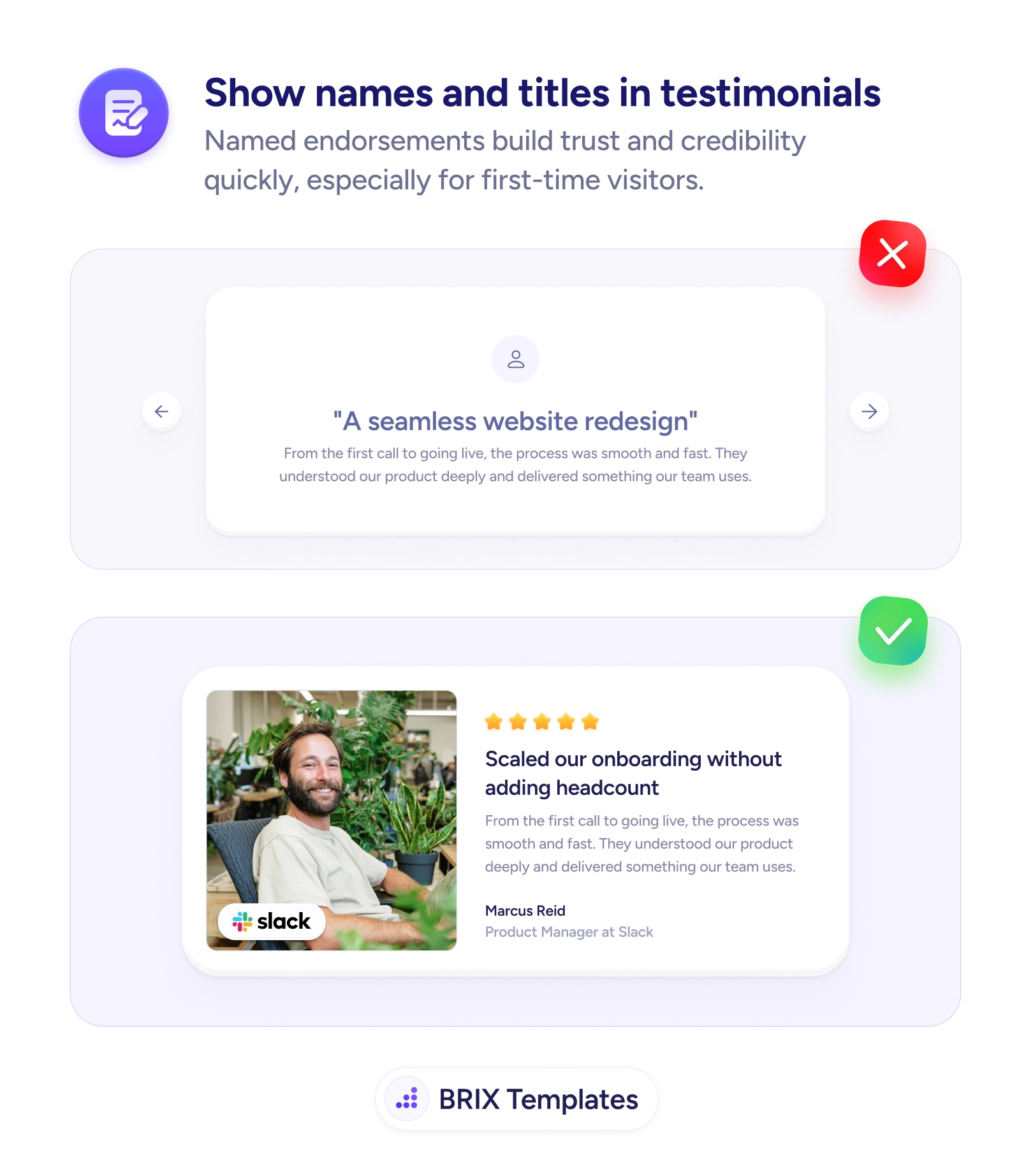
A testimonial with no attribution is indistinguishable from copy the company wrote about itself. “A seamless website redesign” floating above a quotation mark gives the reader nothing to anchor belief to — no person, no role, no way to judge whether this praise came from a relevant customer or a marketing draft. Visitors have learned to discount anonymous quotes precisely because anyone could have written them. The endorsement might be completely genuine, but without a name behind it, it carries the weight of a slogan.
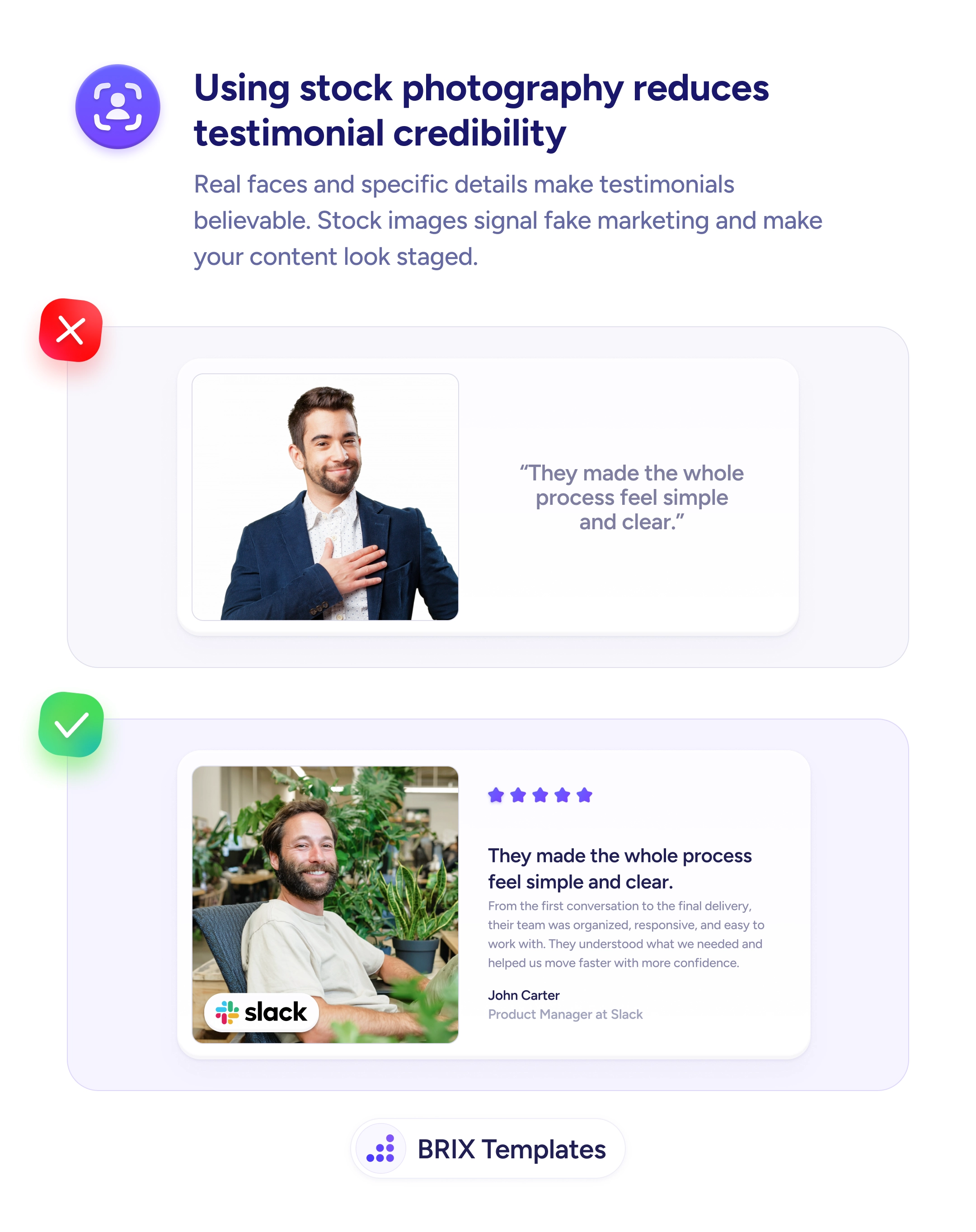
The fix is to attribute every testimonial to a real, specific person. A name like Marcus Reid, a title like Product Manager at Slack, and a recognizable company logo transform the same quote from a sentence into a reference. The reader can now place the speaker, judge whether their role resembles their own, and weigh the praise accordingly. This works best alongside a real photo that proves the person exists — name and title say who, the face confirms they’re real.
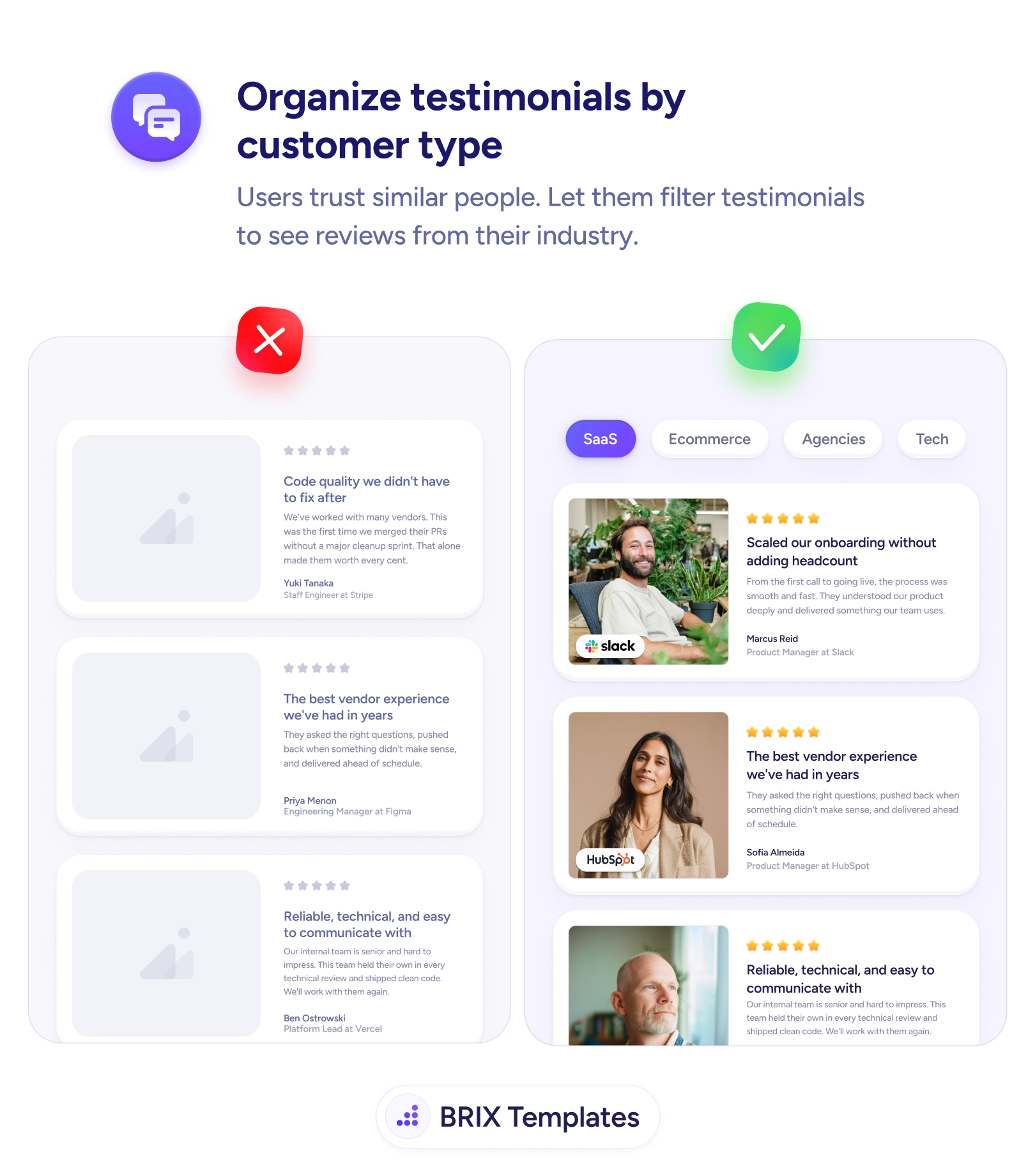
Start by gathering full attribution for each testimonial — name, role, company — with permission to display it. Where a customer can’t be fully named, get as specific as you’re allowed: a role and industry still beats anonymity by a wide margin. Add a short outcome-focused headline so skimmers catch the result instantly, and lean on titles to power testimonials organized by customer type, where the reviewer’s role is what lets a visitor find someone like themselves.
Trust comes from knowing who is vouching for you. Put a real name, title, and face on every quote, and your testimonials stop reading like self-authored praise and start reading like references the visitor can actually believe.
Name, role, and company are the core three. The name makes the person real, the role tells the visitor whether this reviewer's perspective is relevant to theirs, and the company adds recognizable weight. A photo and a company logo reinforce all of it. The more specific the attribution, the harder the testimonial is to dismiss as something you wrote yourself.
Get as close as their permission allows. If a full name isn't possible, a role and industry — 'VP of Engineering at a Series B fintech' — still adds far more credibility than nothing. The goal is enough specificity that the reader believes a real, relevant person said it. A fully anonymous quote reads as marketing; a partially specified but honest one reads as a real reference.
Yes, because relevance drives trust. A founder weighs a fellow founder's words differently than a junior user's, and a marketer trusts another marketer's take on a marketing tool. The title lets the reader decide whether this endorsement applies to their situation. Without it, they can't tell if the reviewer's needs resemble their own.
A short, specific headline above the quote helps a lot. It gives the reader the outcome in a glance — 'Scaled our onboarding without adding headcount' — before they read the supporting detail. Pair that with the name, title, and company, and the testimonial communicates both what was achieved and who's vouching for it, even to someone skimming.