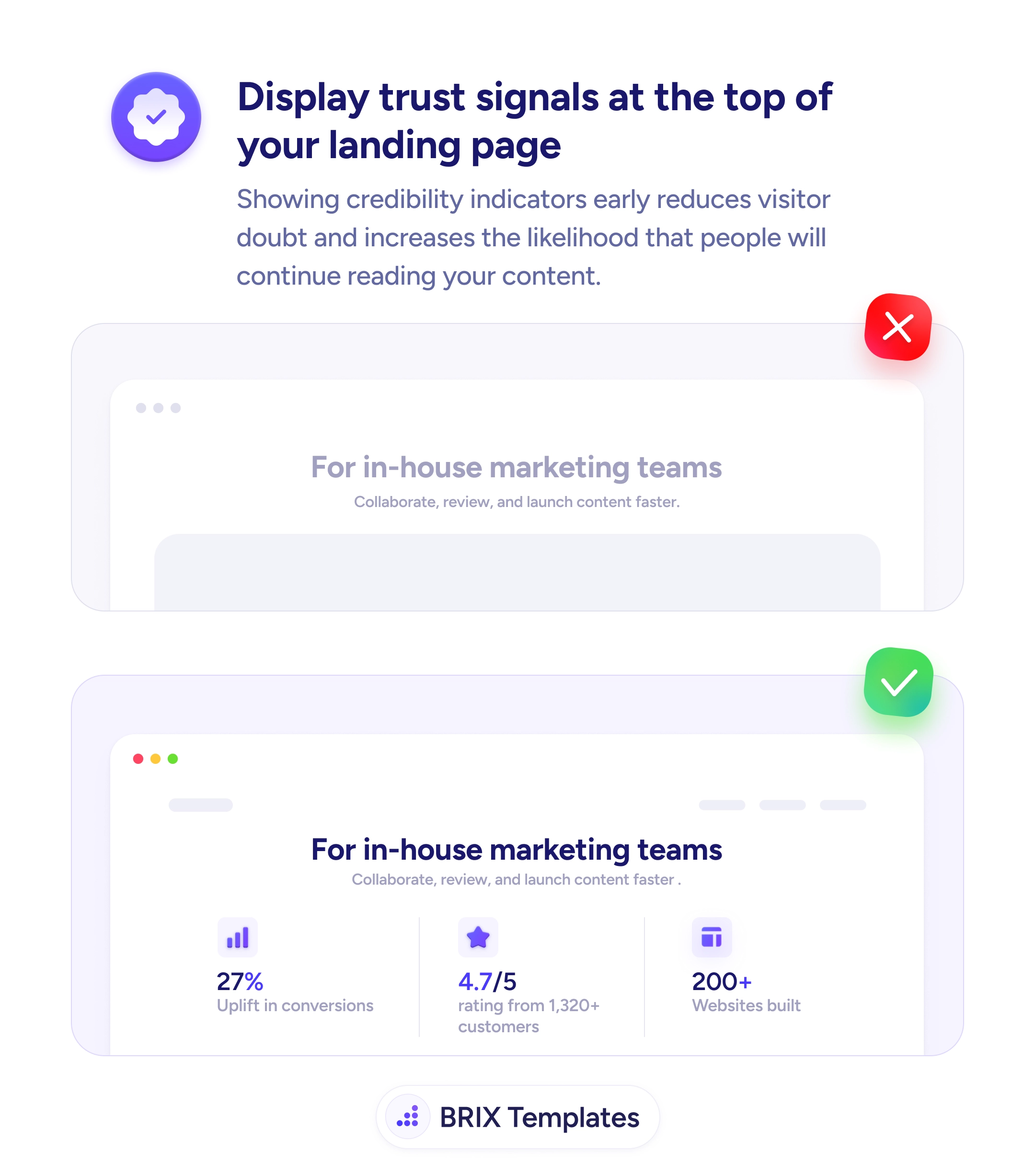
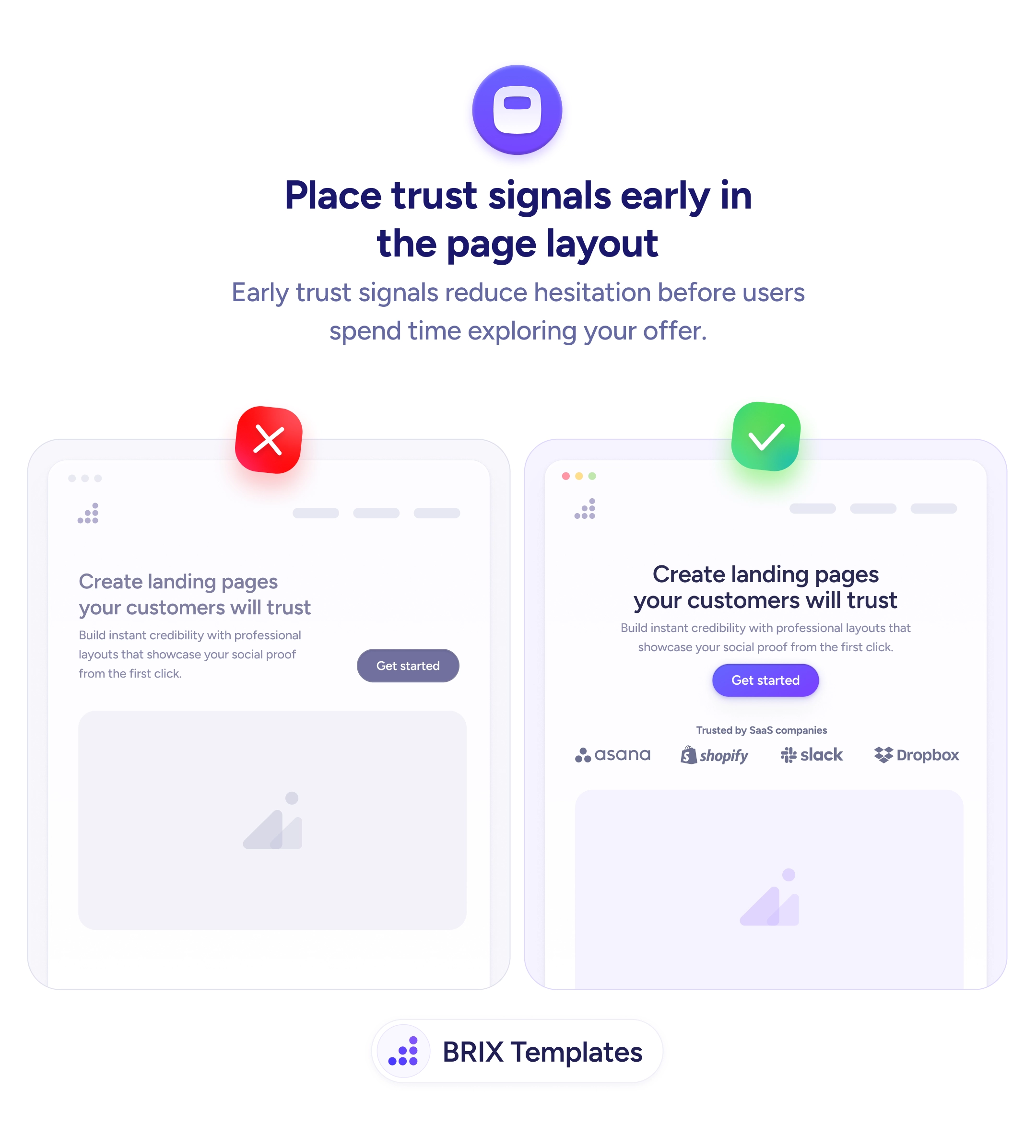
A hero section with a strong headline and no supporting credibility asks visitors to trust the team based on word choice alone. Most won’t — they’ll read the promise, register the absence of evidence, and either bounce or scroll skeptically. The problem isn’t the headline; it’s that the headline is shouldering the entire trust load before anything else on the page has had a chance to back it up.
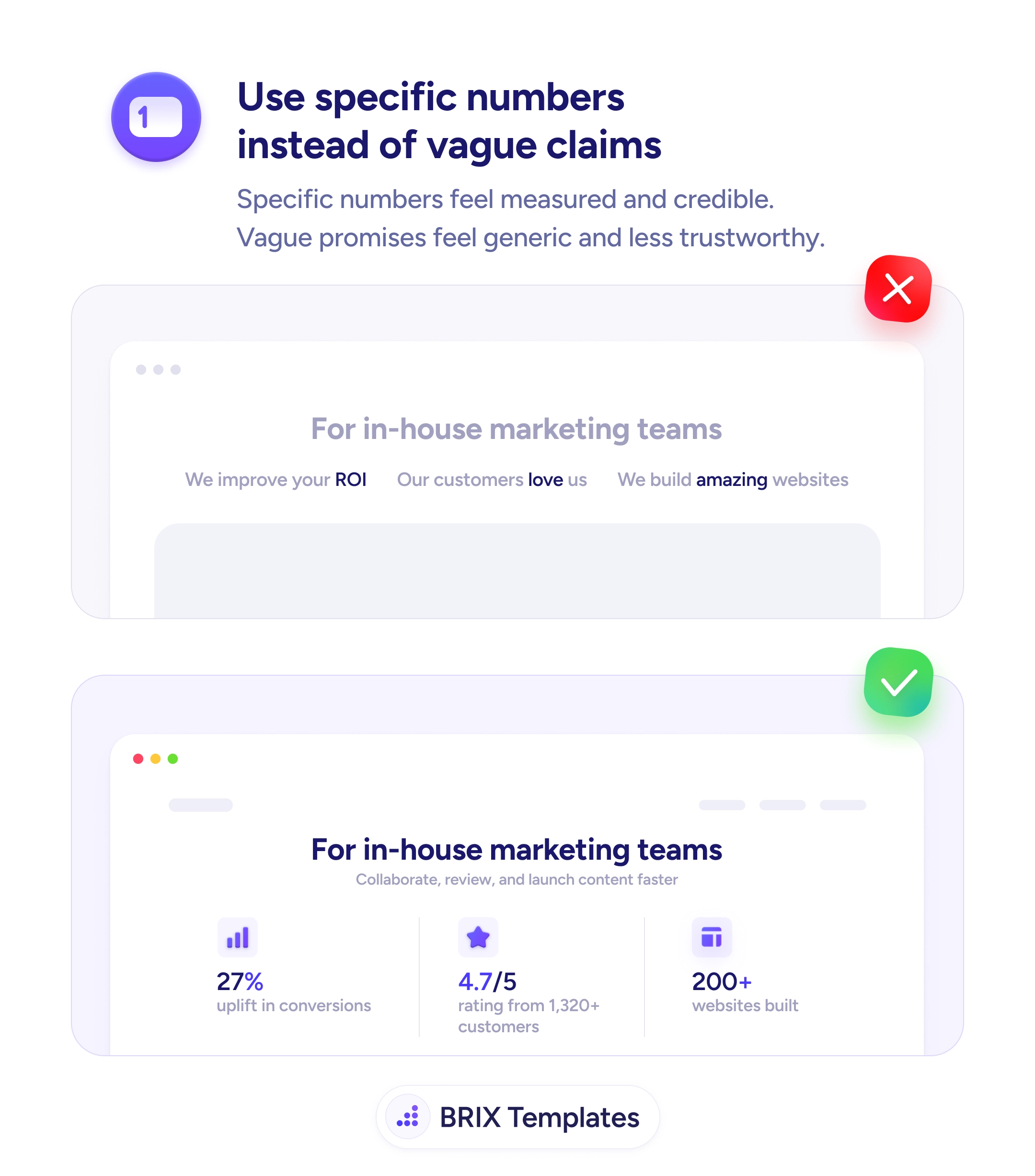
A stronger pattern is to place three compact credibility stats directly under the hero headline so the promise comes with proof in the same glance. A row like “27% uplift in conversions / 4.7/5 from 1,320+ customers / 200+ websites built” gives the visitor an outcome stat, a credibility stat, and a volume stat before they decide whether to keep reading. Each number answers a different doubt — does this work?, do other people trust it?, is anyone actually using it? — and the page earns the right to keep going.
Start by picking one stat from each of three categories: outcome (uplift, time saved, dollars earned), credibility (ratings, reviews, awards), and volume (customers, projects, transactions). Anchor each stat in specifics — real numbers, real units, real sources where possible. Render them as a compact row of icon-led blocks directly under the hero copy so they’re seen but don’t compete with the headline weight.
- Cover three trust dimensions — outcome, credibility, volume — with one stat each rather than three of the same.
- Place the stat row directly under the headline so it lands in the same glance.
- Keep the row compact — icon, number, one-line label. The CTA should still own the space.
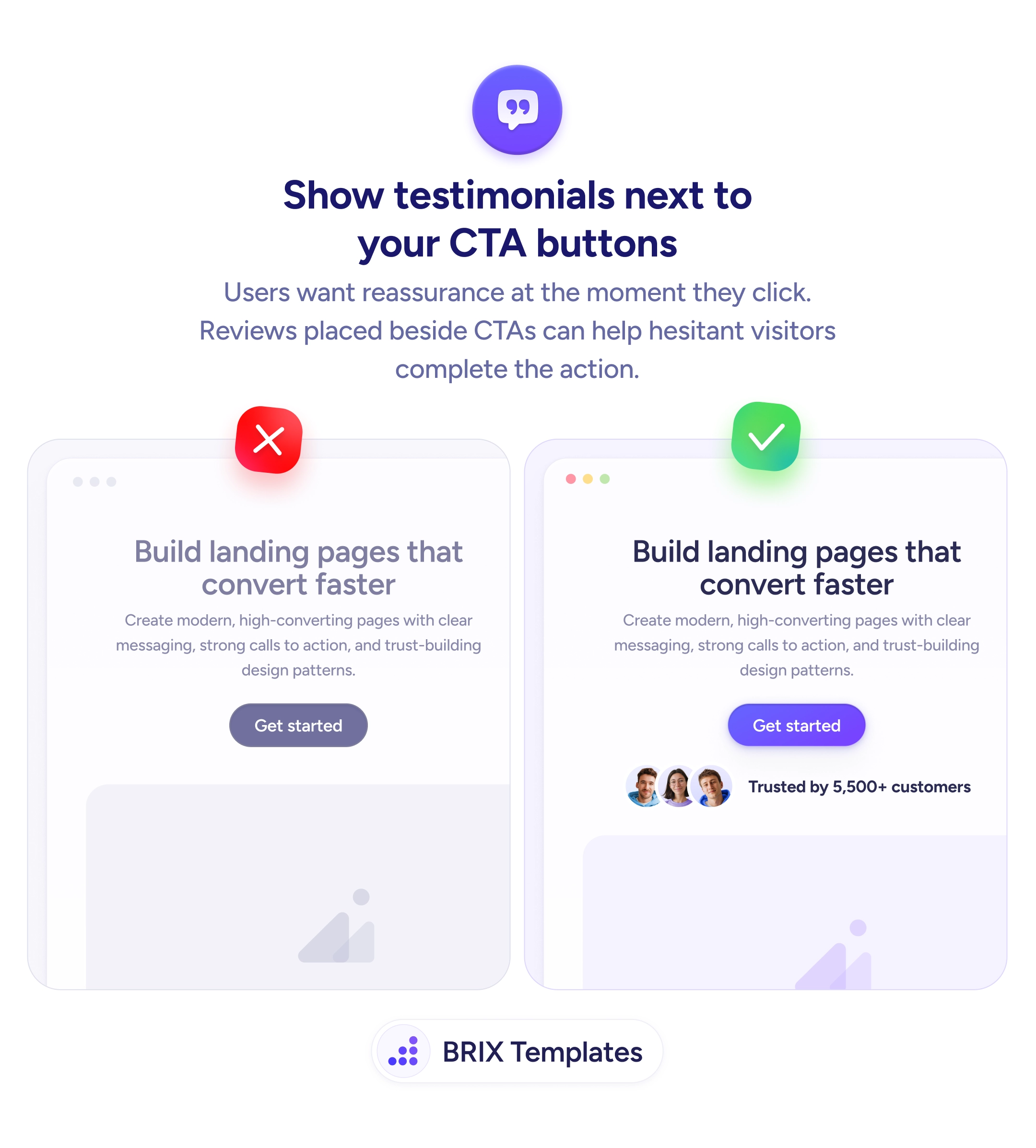
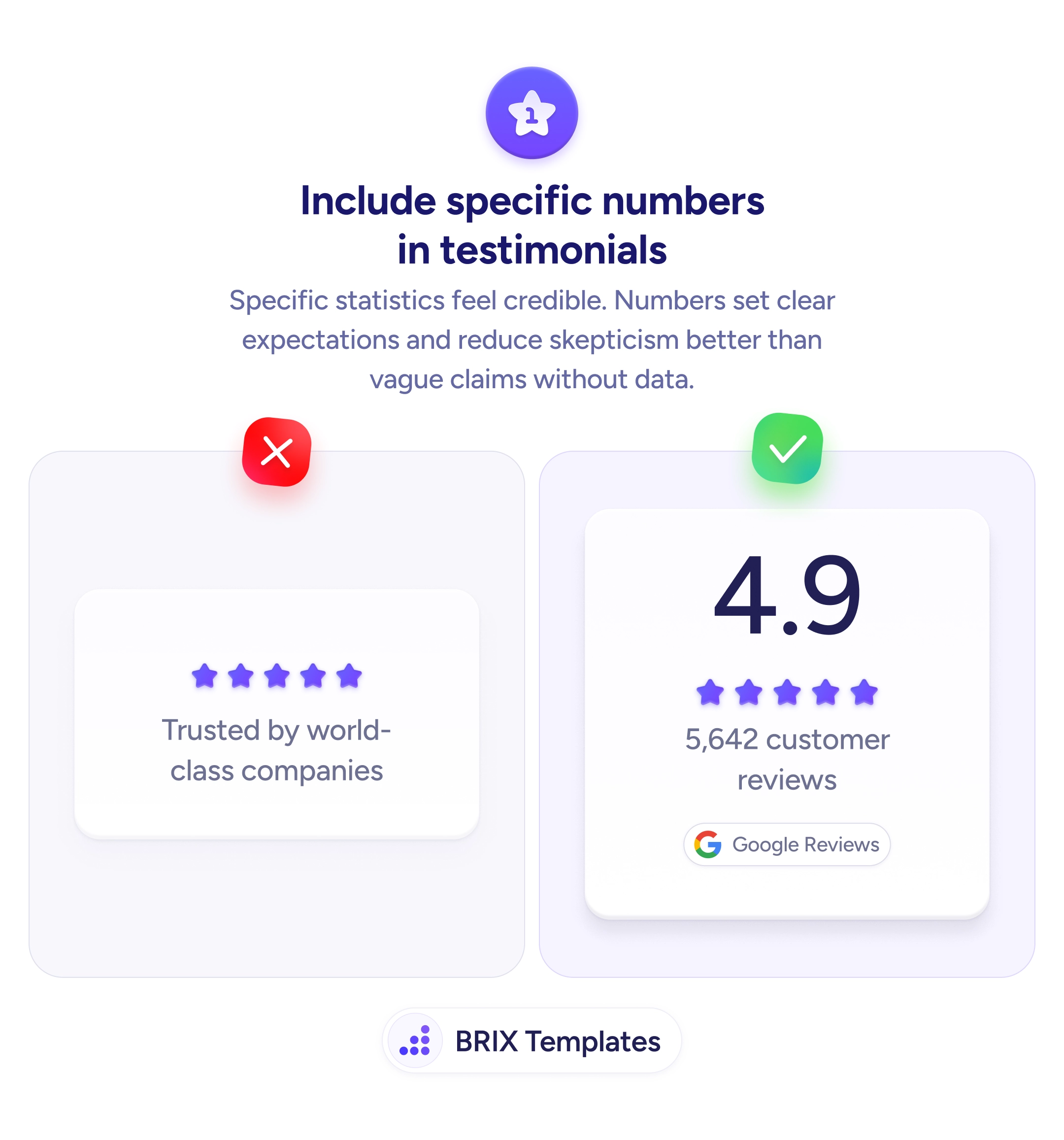
- Use real numbers, even small ones — “12 customers, 5-star average” beats “Loved by many”.
- Link to proof when you can — case study, audit, or public benchmark behind a quiet sub-link.
A hero that carries proof in the first viewport typically holds more visitors through the second scroll, because the page has already answered the “is this real?” question before the user has had time to ask it. Numbers in the hero often outperform any subsequent trust block, because attention is highest at the top of the page and lowest by the time the testimonials appear.