Status & feedback
Stock photos don't just look fake — they make the quote beside them feel fake too
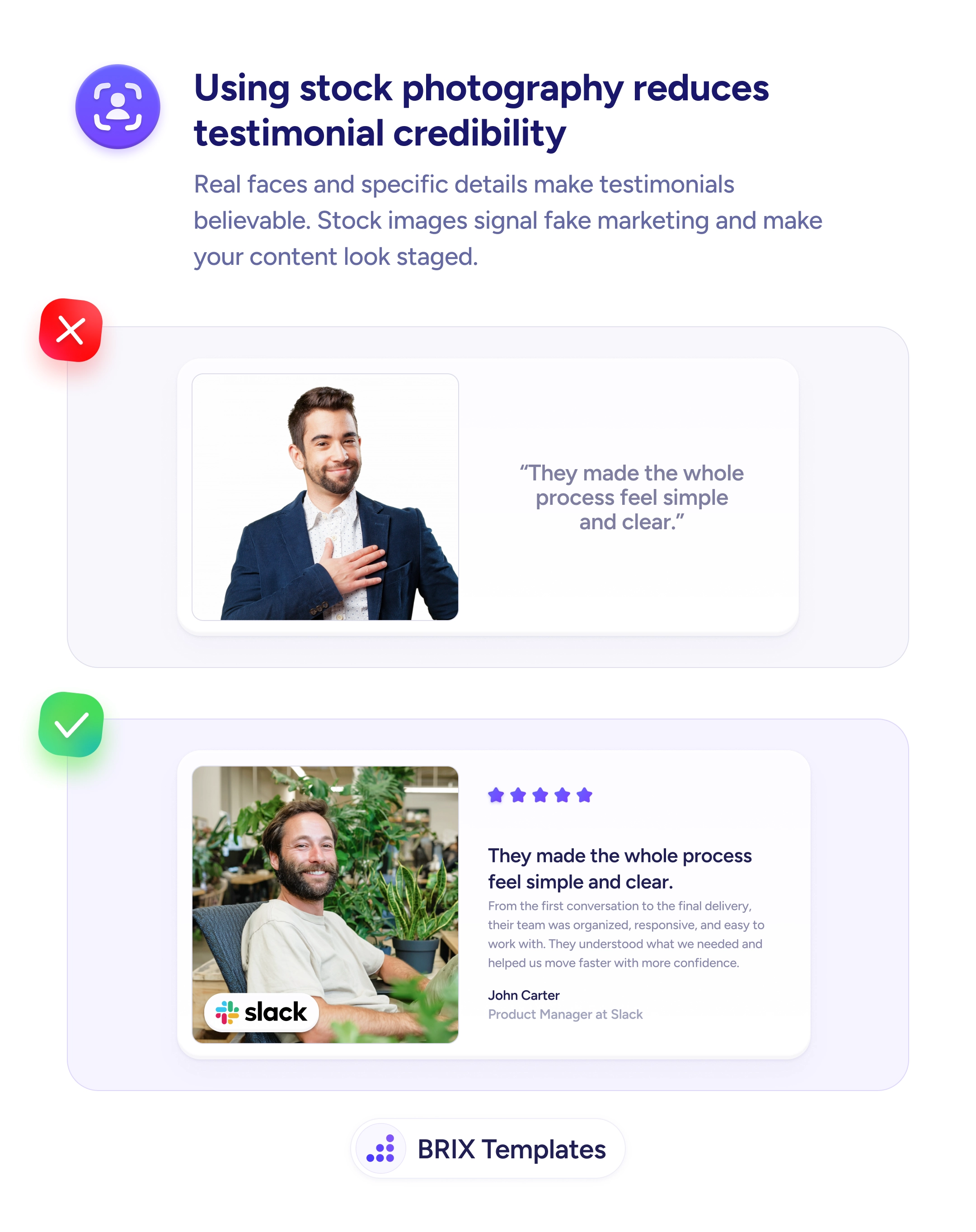
Stock photos next to testimonials signal fake reviews. Use real customer photos with full name, title, and company to make social proof believable.

Status & feedback
Stock photos don't just look fake — they make the quote beside them feel fake too
Stock photos next to testimonials signal fake reviews. Use real customer photos with full name, title, and company to make social proof believable.
When a testimonial uses a stock photo next to a generic quote, visitors often recognize the pattern instantly. The polished, anonymous headshot signals that the review might not come from a real person, which can undermine trust across the entire page. Even a genuine quote loses weight when the face beside it looks like it came from a photo library.
A more effective approach is to pair each testimonial with an authentic customer photo and layer in specific attribution: full name, job title, and company. Adding a company logo and a star rating reinforces the signal that this is verified, real feedback. When the quote itself includes concrete details — what the experience was like, what problem was solved — it becomes much harder for a visitor to dismiss.
Ask customers for a casual, natural photo rather than a corporate headshot. Expand short quotes into brief narratives that mention specific outcomes or moments from the experience. If a customer works at a recognizable company, include the logo alongside their name and title to leverage existing brand trust.
Testimonials built with authentic details can shift a section from feeling like marketing copy to feeling like genuine social proof. The same words often carry more weight when visitors believe they came from a real person with a real name and a real role.
Respect their preference. Use their initials with company name and logo instead. A testimonial with 'J.C., Product Manager at Slack' and the Slack logo is still more credible than a stock photo with a first name only.
B2B testimonials benefit most from job title, company, and logo attribution since buyers evaluate credibility through professional context. B2C testimonials can rely more on star ratings and customer counts.
Yes. Reach out to the original customers for real photos. If they're unavailable, replace the stock photos with initials or avatars rather than keeping images that undermine genuine quotes.
Two to four strong, well-attributed testimonials typically outperform a long carousel of generic quotes. Quality and specificity matter more than volume.